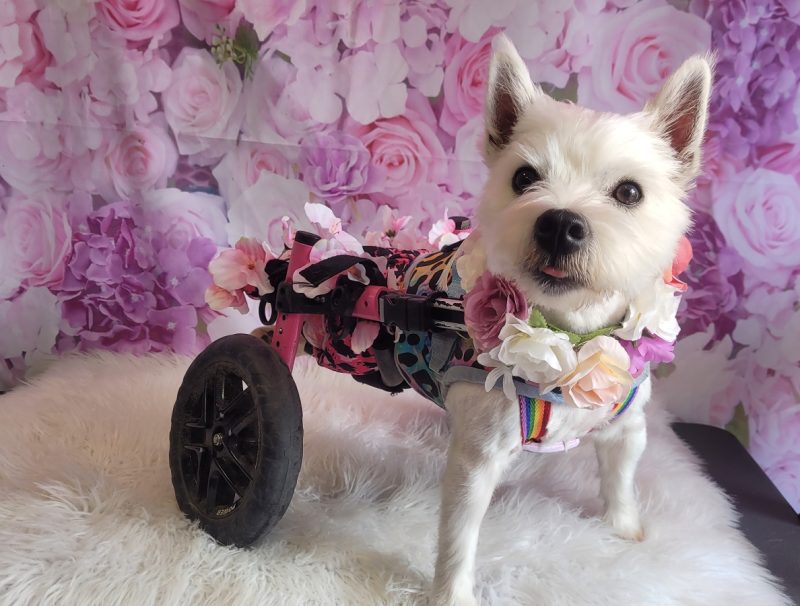
# Pumpkin the Wheelie Dog's Story
Pumpkin, a disabled dog who uses a wheeled mobility device, has become an inspiration to pet owners navigating life with disabled animals. The dog's journey demonstrates that mobility challenges do not limit a pet's quality of life or ability to bring joy to their families.
Dogs with spinal injuries, degenerative myelopathy, or rear-leg paralysis often benefit from custom-built carts or wheelchairs that allow them to maintain independence and exercise. Pumpkin's story highlights how modern assistive devices have transformed care options for dogs with mobility impairments.
The use of dog wheelchairs, sometimes called "carts" or "mobility devices," has grown increasingly common in veterinary practice. These devices support dogs' rear quarters, allowing them to continue walking, playing, and exploring their environments despite losing function in their hind legs. Veterinarians often recommend these tools as part of comprehensive care plans for dogs facing paralysis or severe mobility loss.
Pumpkin's owner shares how the dog adapted to using the wheeled device and continued participating in family activities. Stories like Pumpkin's encourage other dog owners to explore mobility solutions rather than accepting limitations as the end of their pet's active life.
For owners of disabled dogs, several factors matter when selecting mobility aids. Proper fit prevents injury and discomfort. Regular veterinary check-ups ensure the device remains appropriate as the dog's condition evolves. Physical therapy exercises complement mobility devices by maintaining muscle tone and range of motion.
The emotional benefits also prove substantial. Disabled dogs using mobility aids often display improved confidence and reduced depression related to immobility. They maintain social connections with other dogs and participate in family routines more fully.
Pumpkin's story resonates because it normalizes disability in dogs while showcasing the resilience of both animals and their