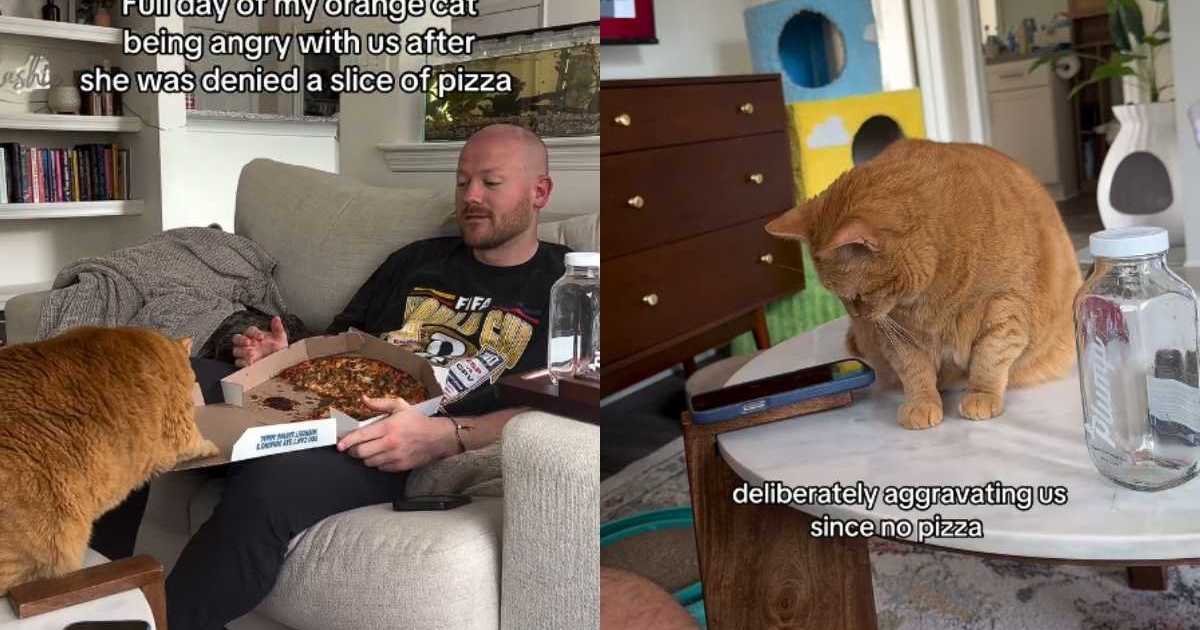
Almond, an orange cat, spent her entire day visibly annoyed after her owner refused to let her eat pizza. In a TikTok video, the owner repeatedly tells Almond to stay away from his slice, warning her not to touch it. When denied access to the food, Almond's frustration becomes clear through her body language and behavior for the remainder of the day.
The video captures a common cat behavior. Cats often react with obvious displeasure when their owners prevent them from accessing food they want. Almond's prolonged irritation demonstrates how cats express their feelings through sustained behavioral changes rather than fleeting moments of annoyance.
Pizza poses real health risks to cats and should never be shared with them. The ingredients in pizza, including garlic, onions, excessive salt, and fatty meats, can harm cats. Garlic and onions are toxic to felines and can damage their red blood cells. The high fat content strains their digestive systems. Cats also lack certain enzymes needed to digest human foods safely.
Pet owners who catch their cats eyeing their plates face a decision. Preventing access feels harsh when a cat stares intently, but it protects their health. Almond's owner made the right call by denying her pizza, even though she expressed clear disappointment.
For cat owners dealing with food-seeking behavior, offering appropriate alternatives helps. Cooked chicken without seasoning, small amounts of cooked fish, or specially formulated cat treats satisfy a cat's desire to eat without the dangers of human food. Keeping pizza and other human meals on high surfaces or closed rooms prevents temptation and conflict.
Almond's viral moment shows that cats remember when they're denied something they want. Building routines where human meals stay separate from cat interactions prevents both the cat's frustration and repeated conflict. Her owner's consistency protected her