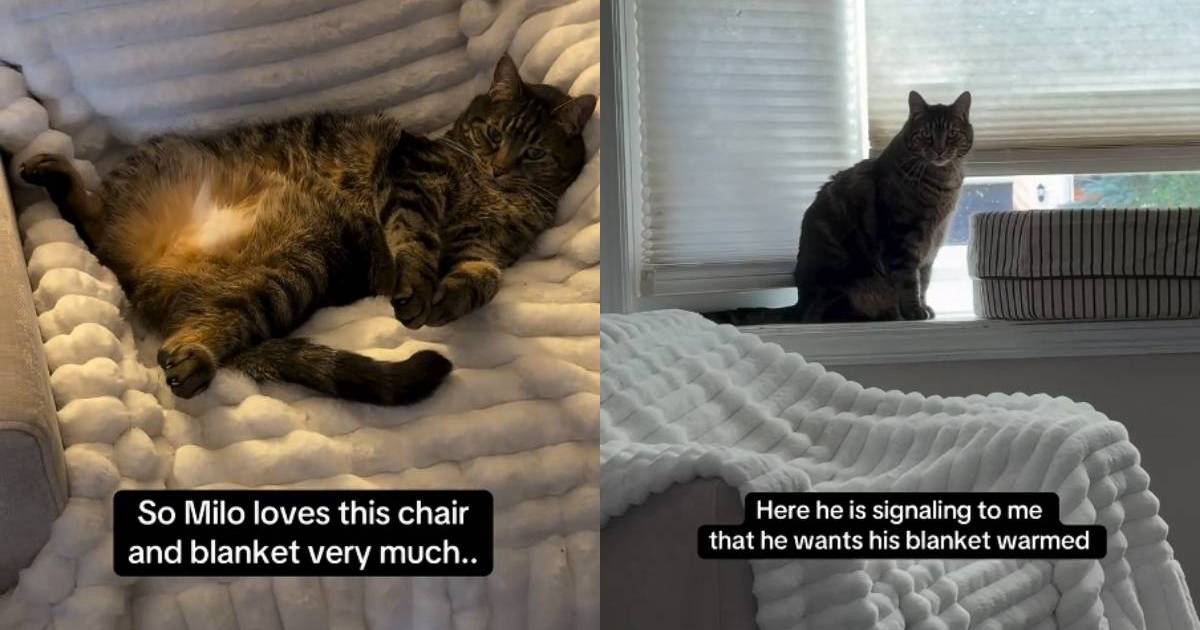
Mr. Milo, a domestic cat, has mastered the art of nonverbal communication to convince his owner to heat his blanket. The feline combines targeted stares, deliberate meows, and strategic body positioning to deliver his message with unmistakable clarity.
Cats rely heavily on body language and vocalization to communicate with their human companions. Mr. Milo's owner observed her cat employ multiple persuasion techniques in sequence, demonstrating how cats understand what works best with individual owners. Rather than submitting written requests, felines like Mr. Milo have learned to decode human behavior and respond accordingly.
This behavior reflects the broader truth about cat communication. Cats use meows primarily to speak with humans, not other cats. Different meows serve different purposes. Some signal hunger or discomfort. Others express affection or demand attention. Strategic positioning works alongside vocalization. A cat sitting directly on a cold blanket, then looking at their owner and meowing, creates an unmistakable request.
Mr. Milo's success with his heating blanket request illustrates feline intelligence and persistence. Cats observe what captures their owner's attention and modify their approach based on results. If staring alone fails, they escalate to meowing. If meowing alone doesn't work, they position themselves on the desired object while making eye contact.
Veterinary behaviorists confirm that cats develop individualized communication patterns with their owners. Each cat learns the specific triggers that prompt human response. Some cats prefer quiet, persistent staring. Others employ loud, repeated vocalizations. Still others combine multiple techniques, as Mr. Milo does.
Pet owners should recognize these communication attempts as signs their cats are trying to meet genuine needs. A cat requesting a heated blanket likely feels cold. Providing appropriate comfort tools improves feline welfare. Understanding cat communication strengthens the human-animal bond