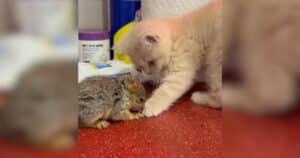
A kitten became an unexpected source of comfort for a frightened baby squirrel, demonstrating how cross-species companionship can help traumatized wildlife recover emotionally.
The young squirrel arrived at a wildlife rehabilitation facility severely distressed after being separated from its mother. Staff recognized the animal needed more than basic care to heal from its fear and anxiety. In an unconventional approach, they introduced the squirrel to a gentle kitten living at the facility.
The pairing proved transformative. The kitten's calm presence and non-threatening behavior helped the squirrel gradually relax. Over time, the two animals bonded, with the kitten providing the physical comfort and companionship the orphaned squirrel desperately needed. The squirrel learned to trust again through this safe relationship.
Interspecies friendships like this one highlight how social animals respond to emotional support. While squirrels typically interact only with other squirrels in nature, young animals separated from their mothers often benefit from substitute companionship. The kitten offered warmth, gentle play, and consistent presence without predatory threat. These elements proved essential for the squirrel's psychological recovery.
Wildlife rehabilitators recognize that orphaned and traumatized animals require emotional care alongside medical treatment and proper nutrition. When handled appropriately, domestic animals can play a role in that healing process. The kitten's natural gentleness made it an ideal match for this vulnerable squirrel.
The story underscores an important reality for pet owners and animal lovers. Young animals in distress need more than food and shelter. They need to feel safe through positive social contact. While most pet owners won't care for wild squirrels, the principle applies to domestic animals too. Kittens, puppies, and other young pets benefit enormously from early socialization and consistent companionship that builds confidence and security.