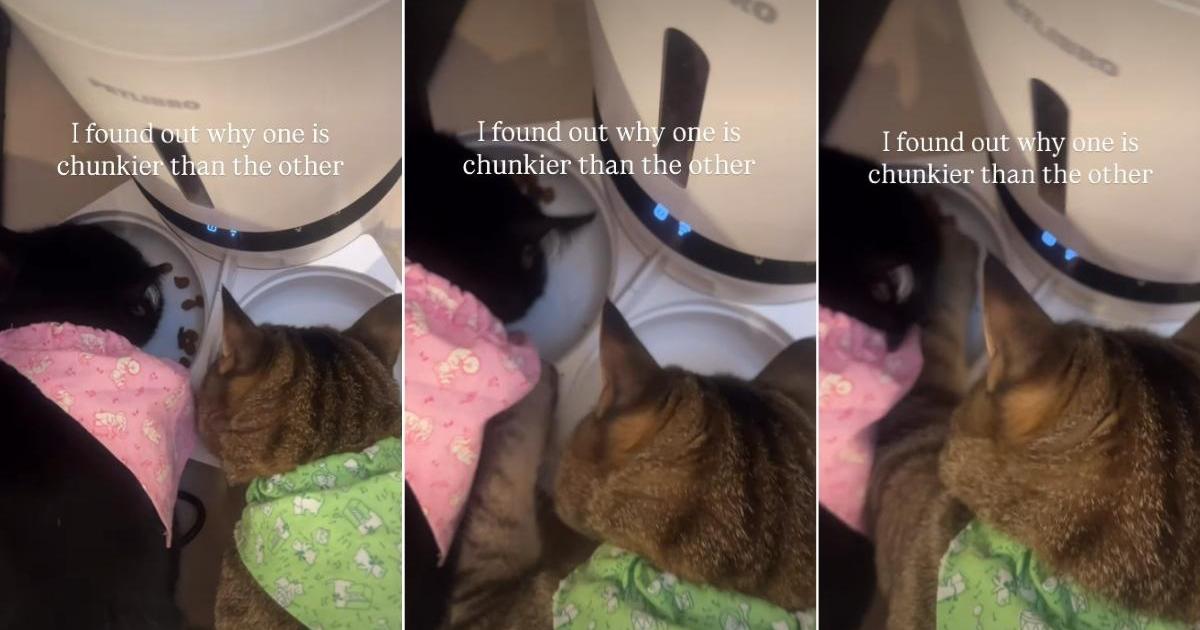
Emilie, owner of two New York cats named Meelo and Miso, recently discovered the reason behind their different body sizes. An Instagram video posted on her account @meeloandmiso captured the culprit in action. While both cats eat from an automatic feeder, Miso quietly reaches across and steals food from his brother Meelo's bowl during mealtime.
The footage reveals a common problem many multi-cat households face. Dominant or more assertive cats often consume more than their fair share of food when owners feed multiple cats from shared feeding stations. In this case, Meelo, a black domestic cat, appears to be the victim of his brother's food theft, which explains why Miso appears heavier.
This discovery highlights the importance of monitoring feeding habits in homes with multiple cats. Cats have varying metabolic rates and activity levels, but when one cat consistently eats more than intended, weight gain follows quickly. Overweight cats face serious health risks including diabetes, joint problems, and heart disease.
Pet owners with multiple cats should consider several feeding strategies. Separate feeding bowls placed in different rooms allow owners to monitor each cat's intake more accurately. Automatic feeders with microchip recognition technology work well for households with cats of different dietary needs. These feeders only open for the specific cat wearing the appropriate collar tag, preventing food stealing entirely.
Meelo's case serves as a reminder that behavioral changes and weight differences between cats warrant investigation. An owner might initially assume one cat simply eats less or exercises more, missing the real issue happening at mealtime. Emilie's observation protects Meelo's long-term health by revealing the pattern before weight-related complications develop.
For cat owners noticing similar size differences between their pets, veterinarians recommend evaluating feeding setup and monitoring each cat during meals. Individual feeding stations and scheduled mealt