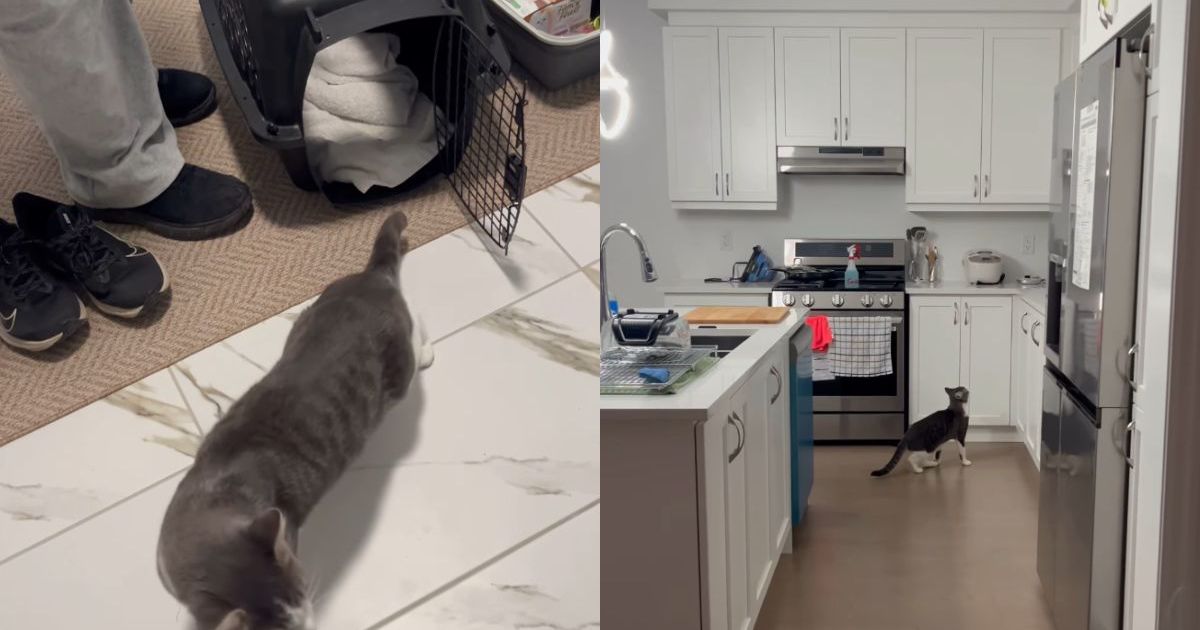
A content creator recently welcomed a gray-and-white foster cat named Cammy into her home, documenting the feline's first night in a video that captures the tender reality of introducing a shelter cat to a new environment.
Cammy's arrival showcased classic cat behavior during relocation. The first night involved careful exploration of the home as she established her base and grew comfortable with unfamiliar spaces. Foster cats often exhibit this cautious approach, sniffing corners, investigating furniture, and identifying safe spots before fully relaxing.
The creator posted her experience online, and the interaction with Cammy sparked an unexpected emotional connection. What started as a temporary fostering arrangement left her genuinely questioning whether she could return the cat once the placement ended. This reaction mirrors what many foster volunteers experience. The combination of a cat's gentle personality, endearing quirks, and the time spent together in a home setting often transforms foster-to-adoption situations.
For people considering fostering cats, Cammy's first night demonstrates what to expect during the adjustment period. New foster cats need quiet space, accessible litter boxes, food and water stations, and hiding spots where they feel secure. Patience during the first 24 to 48 hours helps cats acclimate faster. Most foster cats begin showing their true personalities once they feel safe.
Foster programs rely on volunteers to temporarily house cats, freeing up shelter space and allowing animals to decompress in home environments where they often thrive. Fosters gain valuable insight into a cat's behavior and compatibility with home life. Shelters benefit from the reduction in overcrowding and the detailed observations volunteers provide.
The creator's hesitation about returning Cammy touches on "foster fail," where volunteers decide to permanently adopt their foster cats. While shelters hope fosters will eventually return animals to be adopted by other families, many organizations recognize that some foster-to-adoption matches create