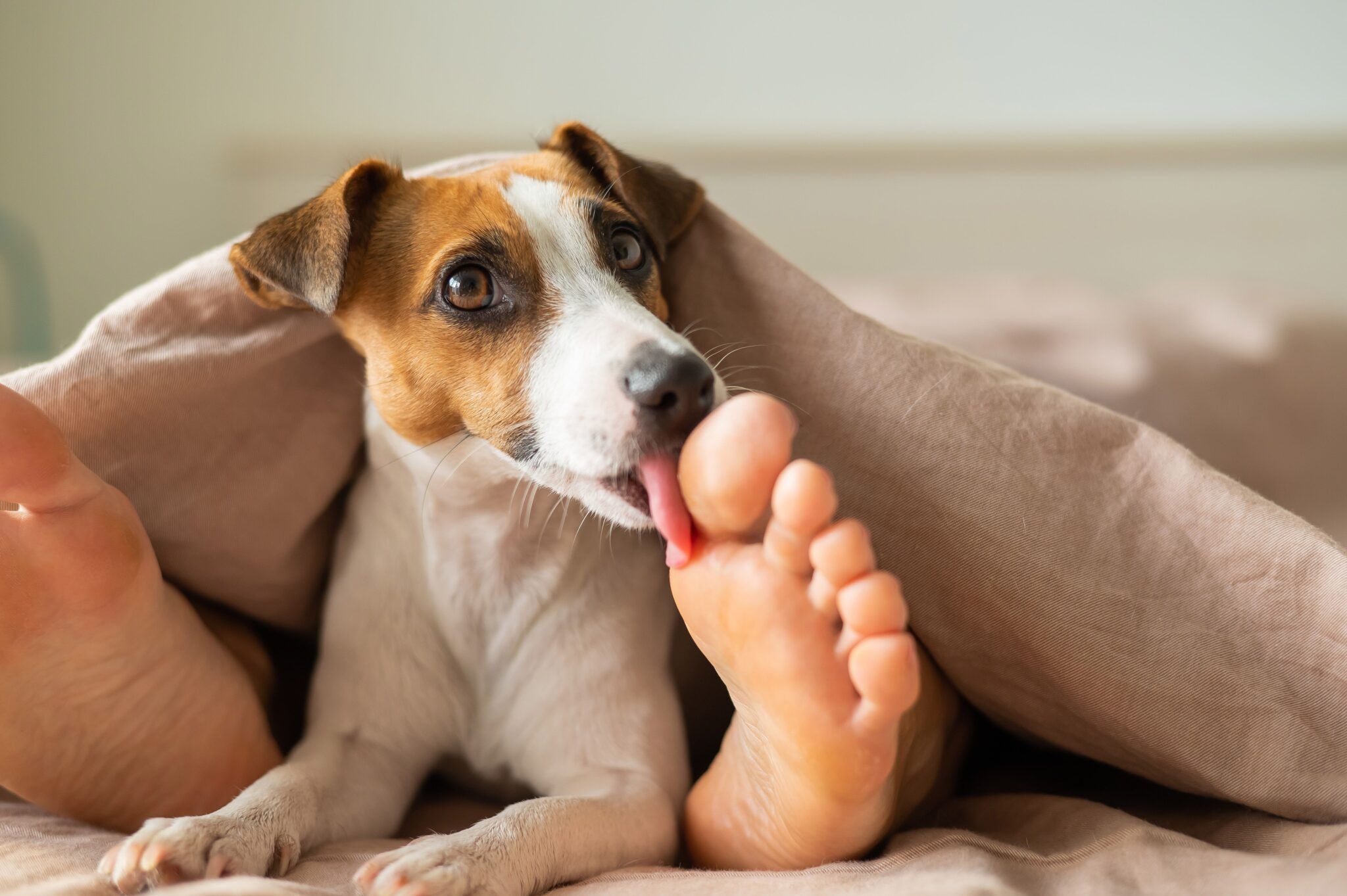
Dogs lick their owners' feet for several reasons rooted in canine biology and behavior. Understanding what drives this quirky habit helps pet owners decode their dogs' intentions.
Dogs use licking as a primary communication tool. When your dog licks your feet, they may be showing affection and bonding with you. Puppies naturally lick their mothers' faces to stimulate feeding, and adult dogs retain this behavior as a sign of comfort and attachment. Your feet offer an accessible target for this instinctive action.
Scent exploration also plays a role. Dogs perceive the world largely through smell, and feet contain sweat glands that release pheromones and unique odors. Your feet broadcast information about where you've been, what you've eaten, and your overall health status. Licking helps dogs gather this sensory information and feel more connected to their pack.
Some dogs lick feet due to learned behavior. If your dog received attention, treats, or playtime following foot licks in the past, they may repeat the behavior to recreate that positive interaction. This reinforcement cycle strengthens the habit over time.
Medical concerns warrant attention if licking becomes excessive or obsessive. Skin irritation, yeast infections, parasites, or allergies can cause dogs to lick their own paws and potentially transfer the behavior to your feet. If your dog suddenly intensifies foot licking, consult your veterinarian to rule out pain or dermatological issues.
Nutritional deficiencies occasionally contribute to licking behavior. Dogs craving specific minerals or nutrients may seek them from sweat and skin salts on your feet. A balanced diet from reputable manufacturers typically prevents this type of nutritional seeking.
Most foot licking represents normal, harmless affection. Pet parents who find the behavior unpleasant can redirect it by offering appropriate licking outlets like a damp wash