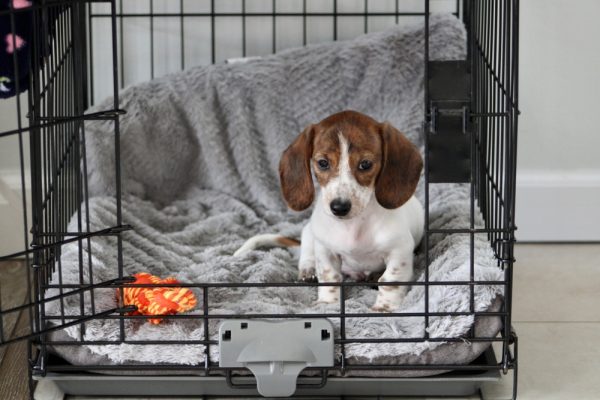
# The Crate Setup Most Dog Owners Get Wrong (And How To Fix It!)
Most dog owners make a basic mistake when setting up crates for their pets. The issue lies not in the crate itself, but in how owners approach the entire space and environment.
Many owners treat crates as punishment zones or places to confine dogs when they leave the house. This fundamental misunderstanding creates anxiety and resistance. Dogs don't naturally see crates as safe havens when owners frame them negatively. Instead, crates become sources of stress rather than comfort.
The fix starts with positioning. Your dog's crate should sit in a family living space, not isolated in a garage or basement. Dogs are social animals. They want to be near their families, even while resting in a confined space. A crate positioned in the living room or bedroom helps your dog feel included while establishing a secure zone.
The second common error involves crate size. Many owners buy crates too large. A dog should be able to stand, turn around, and lie down comfortably. Excess space tempts dogs to eliminate in one corner and sleep in another, defeating the housetraining benefits crate training offers.
Introduce your dog to the crate gradually. Leave the door open initially. Toss treats inside and praise your dog for entering voluntarily. Never force your dog into the crate. Over two to three weeks, your dog learns the crate means good things happen there.
Remove the negative association entirely. Never use the crate as punishment. Don't slam the door or raise your voice near it. Instead, establish a calm closing routine. Close the door briefly during positive interactions, then immediately reopen it.
Finally, manage the time inside. Young puppies can hold their bladder only one hour per month of age, plus one. A three-month-old puppy handles three to four hours