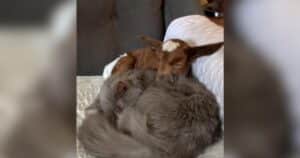
# Rejected Baby Goat Bonds With Cat, Adopts Feline Behavior
A baby goat rejected by her mother found an unlikely caregiver in a domestic cat, and the cross-species friendship fundamentally changed how the young goat sees herself.
The goat kid, separated from her biological mother, initially struggled without maternal care. A resident cat stepped in and began nurturing the abandoned animal, providing companionship and comfort during a critical developmental period. The bonding experience proved transformative.
Over time, the baby goat adopted distinctly feline behaviors. She now acts like a cat in many ways, mimicking the mannerisms and social patterns of her feline mentor. This cross-species imprinting demonstrates how animals raised by different species can internalize those behaviors as their own identity.
Animals often form attachments to caregivers regardless of species boundaries. Young animals particularly rely on social cues from their guardians to learn species-typical behaviors and social norms. When a goat kid lacks maternal guidance from other goats, she instead models herself after the available caregiver, the cat in this case.
This situation highlights the flexibility of early development in young animals. Goats are highly social creatures that naturally form bonds with herd members and caregivers. The rejected kid transferred those bonding instincts to her feline companion, creating an unexpected but functional relationship.
While the goat's adoption of cat behaviors appears unconventional, such cross-species bonding enriches both animals involved. The cat gained a companion to nurture, while the goat received the maternal care and socialization she needed to thrive. The relationship demonstrates animal resilience and the power of companionship to transcend species boundaries.
Caretakers working with rejected livestock often pair young animals with compassionate companion animals when same-species nurturing isn't available. These bonds, while