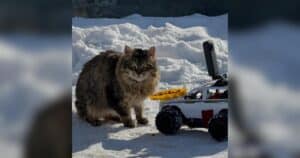
A man has found an innovative solution to feed stray animals while maintaining safe distance from them. Using remote-controlled cars and drones, he delivers food to hungry cats and dogs without direct contact, solving a common challenge for animal lovers working with unsocialized strays.
The RC vehicles allow him to place meals where frightened or aggressive strays can eat without feeling threatened. This approach works well for cats and dogs that avoid human interaction but still need nutrition. The drones extend his reach to animals in difficult-to-access locations, eliminating the risk of bites or scratches during feeding sessions.
This method addresses a real problem facing animal rescue workers and community feeders. Many stray cats and dogs have learned to fear humans through negative experiences. Traditional hand-feeding or bowl placement requires close proximity, which can trigger defensive behavior in traumatized animals. The remote delivery system keeps both the feeder and the animals safe while ensuring strays receive consistent meals.
The strategy also helps with population management. When rescue organizations locate strays in preparation for trap-neuter-return programs, they often need to build trust through regular feeding. This technique accelerates that process without causing stress to the animals. Once strays become accustomed to the routine, they're more likely to enter traps peacefully for medical care.
Pet owners interested in helping stray populations can adapt similar low-stress feeding approaches. The RC vehicle method works especially well in urban areas where direct contact with strays poses safety concerns. Community members using this technique report that animals quickly recognize the sound of the vehicles and gather for meals, establishing predictable patterns that aid rescue efforts.
This creative use of technology demonstrates how innovation serves animal welfare. Rather than wrestling with frightened strays or risking injury, advocates can feed effectively while reducing animal stress. The approach shows promise for improving outcomes in stray management programs across neighborhoods and cities.