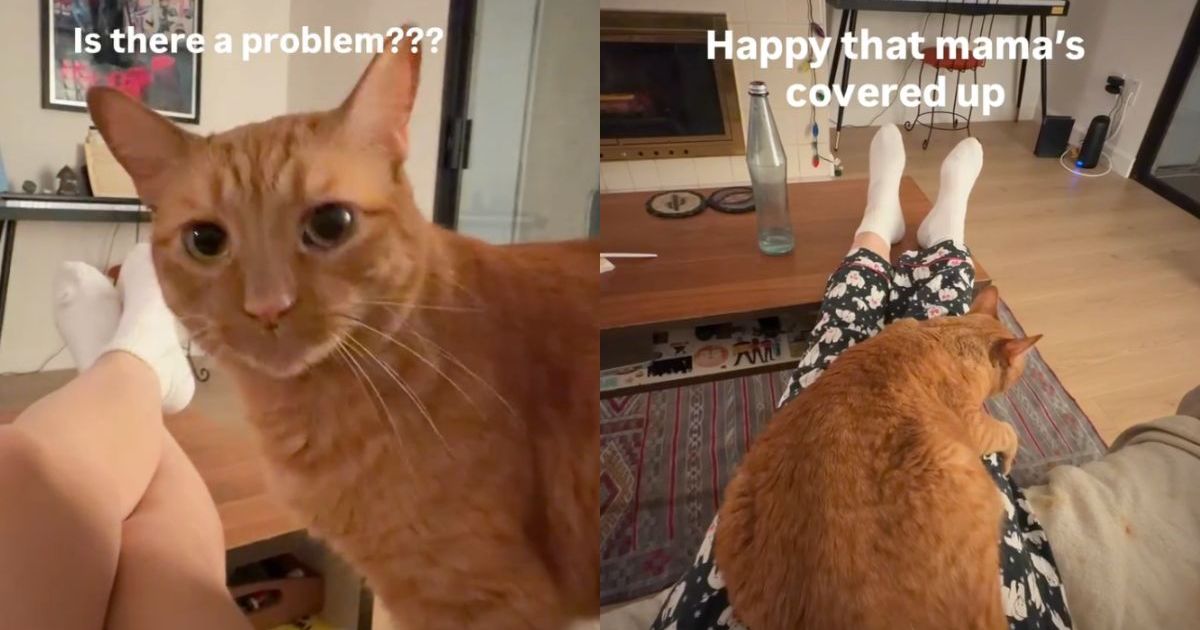
A cat has become internet famous for displaying hilariously judgmental behavior whenever his owner goes without pants at home. The feline's disapproving reactions caught the attention of Instagram users after his owner posted a video showing the cat's consistent response to casual home attire.
The cat's behavior reveals something pet owners rarely discuss. Felines develop strong preferences about their human companions' routines and appearance. This particular cat appears to have formed an expectation that pants are non-negotiable, even indoors. When that expectation goes unmet, he voices his objection clearly.
Cats communicate disapproval through multiple channels. Body language signals like tail position, ear angles, and facial expressions convey their feelings. Some cats add vocalizations, slow blinks, or deliberate distance to underscore their point. This cat's "fashion policing" likely combines several of these signals, creating an unmistakably critical response.
The behavior actually demonstrates normal feline intelligence. Cats notice patterns in their owners' behavior and develop comfort zones around those patterns. When routines shift, they react. Some cats prefer their humans in certain clothes, in specific rooms at particular times, or following established schedules. This cat simply took preference one step further by actively objecting to pants-free lounging.
For pet owners, this serves as a reminder that cats observe far more than we realize. They track our movements, our clothing choices, and our habits. They form opinions about what feels "right" in their household. While the cat's fashion critique seems silly, it reflects genuine feline personality and preference.
The Instagram post sparked conversation about how well cats actually know their owners. Followers shared stories of their own cats displaying unexpected judgments about human behavior. It turns out fashion policing might be more common than most people realize.
This cat's stern disapproval highlights why cats make such engaging companions. They are not passive observers