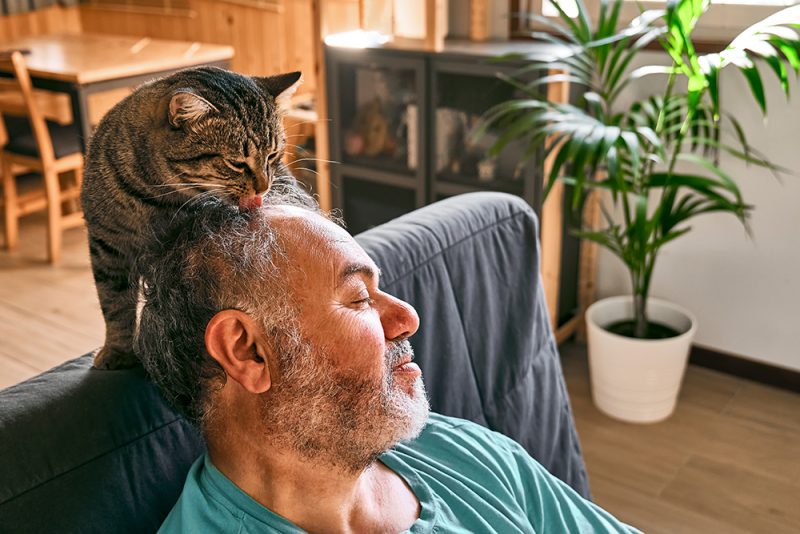
When your cat chews or licks your hair, they're showing affection and bonding with you. Cats groom themselves and each other as a social behavior called allogrooming. When your cat extends this grooming to your hair, they treat you as part of their family unit.
Hair chewing also happens because cats find human hair texturally interesting. The strands feel different from their own fur, and some cats enjoy the sensation of working their teeth and tongue through the texture. This behavior intensifies during times of stress or boredom, when cats may seek comfort through repetitive actions.
Scent plays a role too. Your hair carries your unique smell, and your cat finds your scent comforting. By grooming your hair, your cat mingles their scent with yours, reinforcing the bond between you. This mimics how kittens bond with their mothers.
However, excessive hair chewing warrants attention. If your cat obsessively chews or pulls out human hair, it can signal underlying issues like stress, anxiety, or skin conditions. Cats experiencing stress may resort to repetitive behaviors as a self-soothing mechanism. In rare cases, frequent hair ingestion can lead to hairballs or digestive blockages.
To manage hair chewing, redirect the behavior toward appropriate toys. Offer texture-rich toys like feather wands or rope toys that satisfy your cat's need to chew and groom. Increase playtime and mental stimulation to prevent boredom-related chewing. Keep your hair secured in a bun or ponytail when your cat is particularly interested.
If your cat's hair chewing becomes obsessive, consult your veterinarian. They can rule out medical issues like parasites, allergies, or dental problems. A vet can also assess whether stress or behavioral issues require intervention.
Understanding why your cat ch