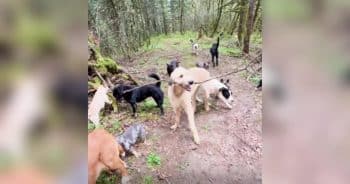
One dog transformed a typical pack walk into an unexpected group endeavor after discovering an oversized stick. The dog's find captivated the entire group, turning what started as routine exercise into a collaborative adventure.
Dogs on group walks often exhibit pack behavior that strengthens social bonds. When one dog discovers something interesting, pack members frequently join in the excitement. This particular discovery showed how dogs communicate enthusiasm and engage with their environment together.
The stick itself became the centerpiece of the walk. Rather than individual dogs pursuing separate interests, the group redirected their attention toward this single object. This type of shared focus demonstrates canine social dynamics in action.
Pack walks offer multiple benefits beyond physical exercise. They allow dogs to interact with peers in a controlled setting, establish social hierarchies naturally, and engage in cooperative play. Group excursions also provide mental stimulation through novel environments and unexpected discoveries like the giant stick.
The incident highlights something pet owners often observe. Dogs don't simply walk in isolation. They communicate with one another, respond to each other's excitement, and frequently coordinate their activities. A single dog's curiosity can spark engagement across the entire group.
For dog owners managing multiple pets or participating in group walks, such moments occur regularly. Natural objects like sticks, leaves, or rocks catch canine attention and transform the walk's trajectory. These unplanned diversions often provide the most enriching experiences for dogs, allowing them to express natural behaviors like investigation and collaborative exploration.
This pack's stick discovery serves as a reminder that dogs thrive on social interaction and environmental engagement. The most memorable walks often happen when dogs follow their instincts together, turning ordinary outings into shared adventures that strengthen pack bonds.