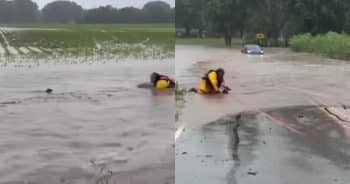
A fire captain in California waded into dangerous floodwaters to rescue a baby deer struggling against the current. The fawn had become trapped during severe flooding that swept through the region, unable to escape the rushing water on its own.
The captain spotted the young white-tailed deer from the road and made the split-second decision to act. Despite the hazardous conditions, he entered the water and reached the fawn, lifting it to safety. The rescue required quick thinking and physical courage, as floodwaters can sweep people and animals downstream without warning.
After being pulled from the water, the fawn appeared exhausted but physically unharmed. Responders dried off the young animal and monitored it for signs of distress or injury. The fawn's mother had been separated from her offspring during the flood, a common tragedy when severe weather strikes wildlife habitats.
Wildlife rehabilitators assessed the fawn's condition and determined it needed care and observation before potential release back into the wild. Young deer separated from their mothers face survival challenges, including difficulty finding food and protection from predators. The rehabilitation team worked to keep the fawn calm and provide fluids and nutrition as needed.
This rescue highlights the broader challenges that flooding creates for wildlife. Heavy rains and overflowing waterways displace countless animals each year. Deer, particularly young fawns, lack the swimming ability and experience of adult animals, making them especially vulnerable during floods. Many wildlife centers report surge in animal intakes following severe weather events.
The fire captain's actions demonstrate compassion toward wildlife during emergency response. First responders often encounter animals in distress while managing human emergencies. This rescue also serves as a reminder that wildlife rehabilitation requires specialized care and expertise. Pet owners and residents can support local wildlife by reporting injured animals to licensed rehabilitators rather than attempting rescue themselves.