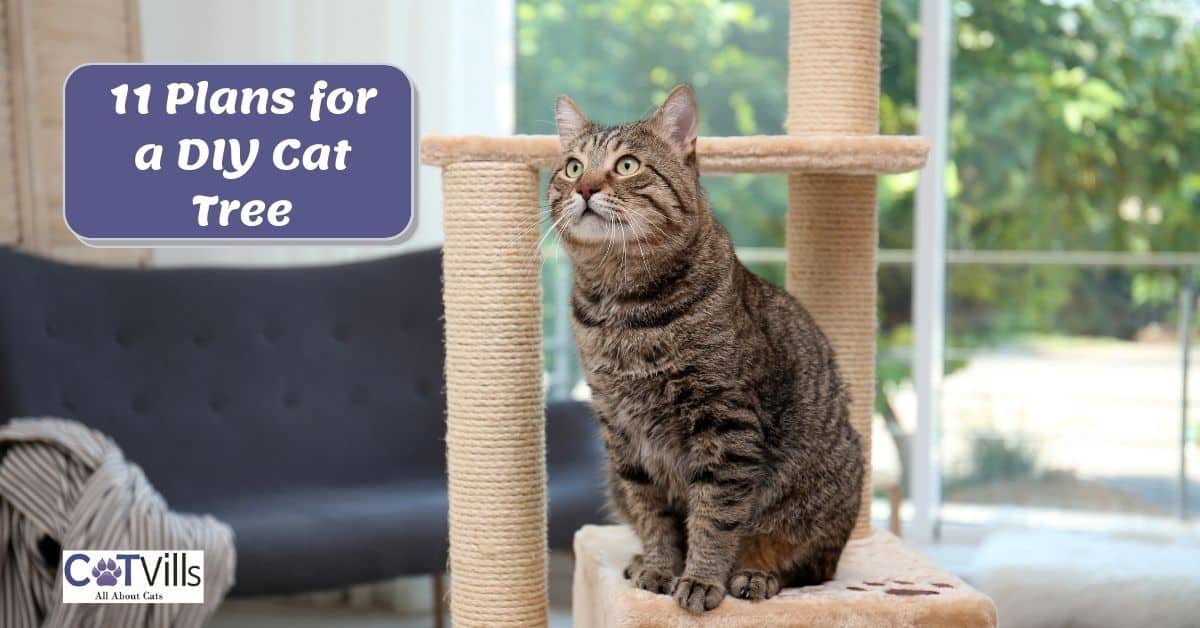
# DIY Cat Trees: Build Enrichment Your Cats Will Love
Building your own cat tree combines a rewarding weekend project with tangible enrichment for your feline companions. Unlike mass-produced options, homemade cat trees let you customize height, materials, and features to match your specific cats' preferences and your home's aesthetics.
A DIY approach offers real advantages. You control wood quality, carpet or sisal rope selections, and structural safety. Commercial cat trees sometimes use weak joints or low-grade materials that fail under active cats. Building one yourself ensures durability and proper weight distribution, especially important for larger cats or multi-cat households.
Basic designs start simple. A scratching post wrapped in sisal rope mounted to a sturdy base works for cats that need nail maintenance and territorial marking. Adding platforms at varying heights creates a vertical playground that taps into cats' natural climbing instincts. Cats need elevated spaces for security and observation, behaviors rooted in their wild ancestry.
More complex builds incorporate multiple elements. Enclosed hideaways provide safe spaces for anxious cats. Dangling toys engage prey drive. Perches positioned near windows offer entertainment and mental stimulation. These features combat boredom, which leads to behavioral problems and obesity.
Online resources provide numerous free plans suited for different skill levels and budgets. Beginners can start with basic designs using PVC pipe or wood branches. Experienced builders create elaborate multi-level structures rivaling commercial options.
Before building, consider your cats' ages and activity levels. Kittens and young cats need tall trees with challenging climbs. Senior cats benefit from lower platforms and ramps for easier access. Observe which surfaces your cats naturally scratch. Some prefer carpet, while others gravitate toward sisal or corrugated cardboard.
Material safety matters tremendously. Use non-toxic stains and finishes. Avoid loose rope