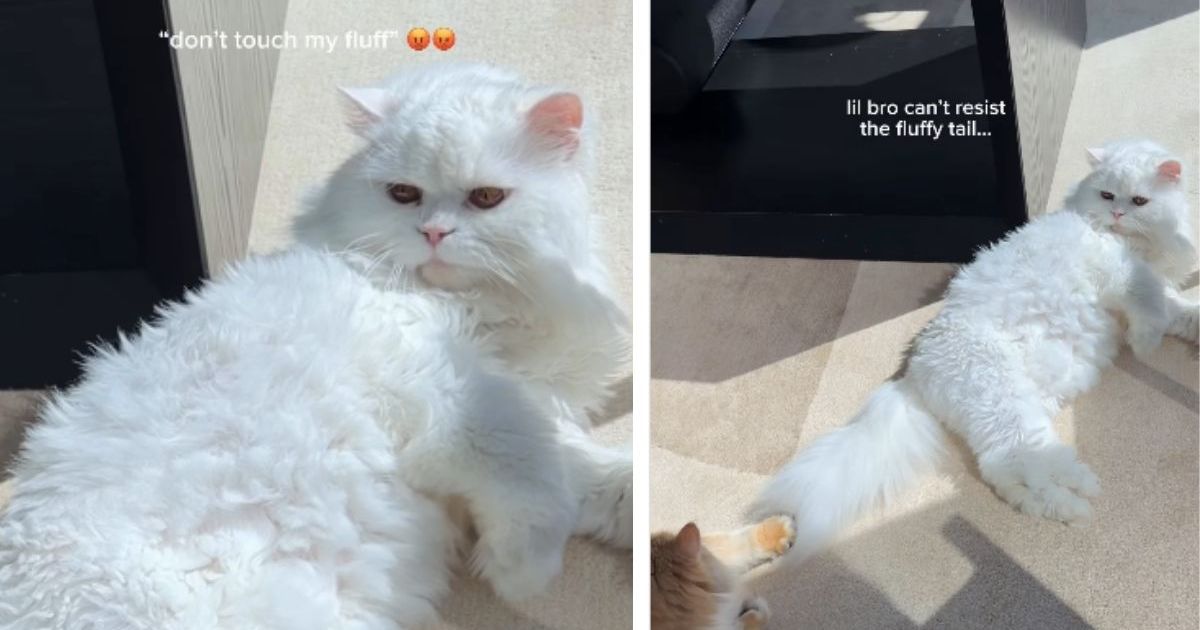
A video shared on Instagram captures the playful dynamic between two cats with starkly different temperaments. Clemmie, the younger cat, shows an irresistible fascination with his big sister's fluffy tail as she attempts to relax on the floor. While his sister prefers to lounge peacefully, Clemmie's curiosity and playful energy drive him to pounce on and bat at her tail repeatedly.
This behavior reflects common personality differences among cats living in multi-cat households. Some cats are naturally more reserved and enjoy quiet rest periods, while others possess high play drive and seek constant stimulation. Younger cats like Clemmie often display this energetic play-seeking behavior, especially toward older cats who may serve as both playmates and role models.
Pet parents managing multiple cats with different energy levels often face similar scenarios. The tail-chasing interaction showcases how cats communicate and bond through play, though it can test the patience of more laid-back felines. Providing separate resting spaces and adequate interactive toys helps balance the needs of both personality types in shared households.
The post gained traction on social media because it resonates with cat owners everywhere. Anyone who has raised two or more cats recognizes this dynamic instantly. The video demonstrates authentic cat behavior without staged elements, showing the real chaos and charm of multi-cat living.
For households with cats of varying temperaments, experts recommend offering multiple enrichment options. Vertical spaces, puzzle feeders, and dedicated play sessions help channel play energy productively. Providing escape routes and quiet zones ensures calmer cats can rest undisturbed when needed.
This clip serves as a gentle reminder that cat households thrive when owners understand and accommodate their pets' individual personalities. Clemmie's enthusiasm for his sister's tail represents harmless kitten energy, though monitoring play intensity prevents accidental injuries or tail trauma that could cause stress