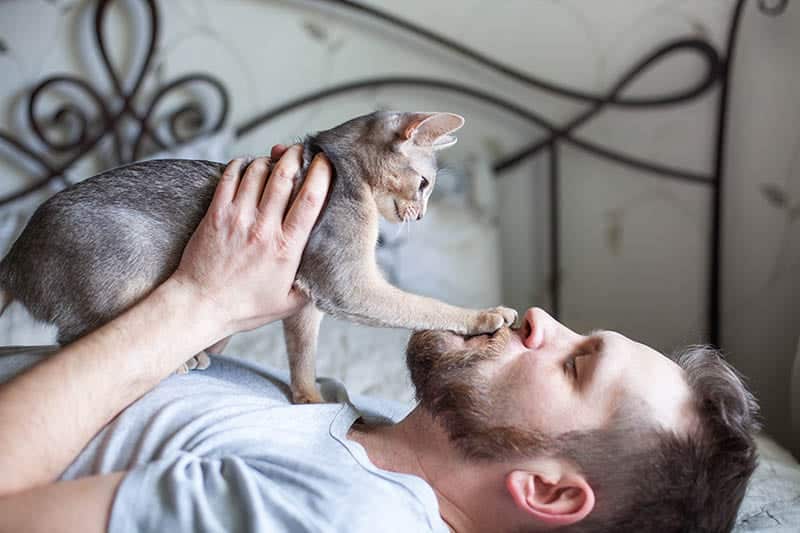
Cats communicate through a surprising range of behaviors, and a paw to the face ranks among their most direct messages. When your cat places a paw on your face, they're not randomly swatting. Five distinct meanings typically drive this behavior.
First, cats paw at your face to demand attention. Your cat notices you're focused on something other than them, so they physically redirect your gaze. This assertive gesture works because it forces immediate acknowledgment.
Second, this behavior signals affection. Cats that feel bonded to their owners often touch faces as a sign of closeness and trust. The paw-to-face contact mimics the way kittens interact with their mothers, creating a nurturing connection.
Third, cats may be marking you with scent glands located in their paws. By touching your face, they deposit their scent and claim you as part of their territory. This marks you as "theirs" to other cats.
Fourth, a paw to the face can indicate hunger or a desire for food. Cats learn that physical contact prompts feeding time, so they resort to this direct method when their bowls sit empty. The behavior escalates when typical meowing goes unheeded.
Fifth, some cats use this gesture to test boundaries. Kittens and younger cats especially paw at faces to learn what behavior their humans will tolerate. They're essentially asking, "Can I do this?"
Understanding these five messages helps cat owners decode their pet's intentions. A gentle paw differs from a sharp swat. The context matters too. A paw while you're sleeping carries different meaning than one delivered while you're awake and working.
Cats rely on multiple communication methods because they understand that humans don't read feline body language instinctively. The paw to the face represents cats taking direct action to bridge that gap. Recognizing what your