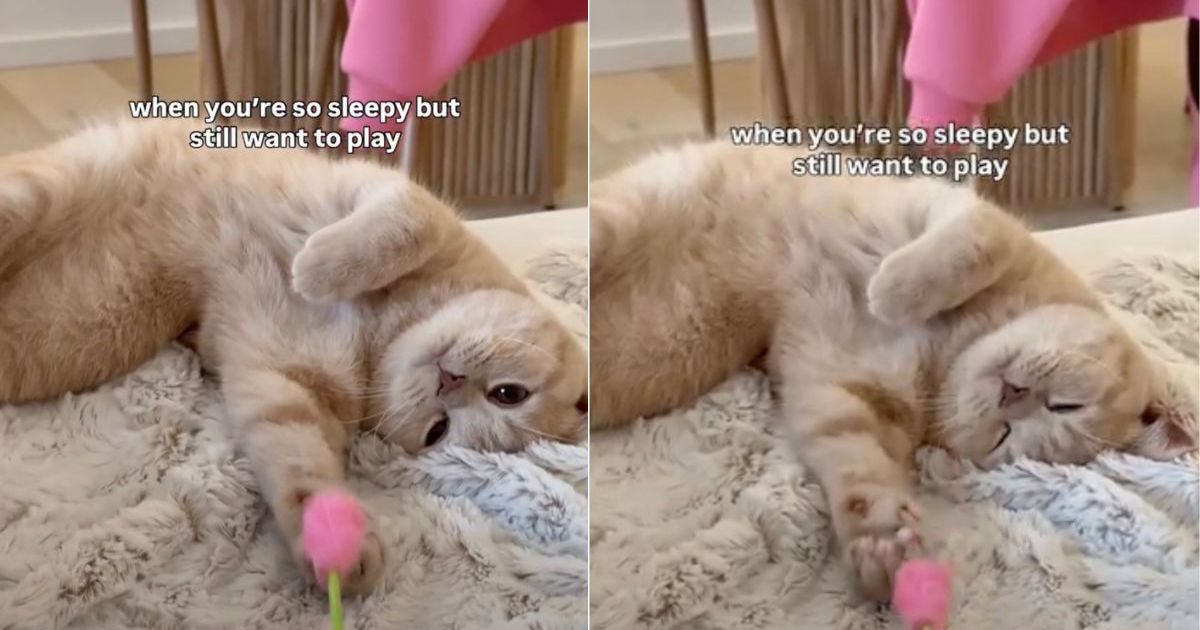
A viral video shows a cat locked in an amusing battle between exhaustion and play drive. The feline continues batting at a flower-shaped toy despite visible signs of sleepiness, fighting to keep its eyes open while remaining committed to the game.
The clip highlights a common cat behavior that pet owners recognize instantly. Cats possess a strong prey drive that overrides fatigue signals. Even when drowsy, they struggle to resist interactive toys that trigger their hunting instincts. The flower toy in this case activates the pounce-and-swat behaviors cats evolved to perform when hunting small creatures.
This behavior has evolutionary roots. Domestic cats retain the hunting sequences of their wild ancestors, even when fully fed and comfortable. Toys that move unpredictably, rustle, or bounce simulate prey movements, making them nearly irresistible to feline brains. The cat in the video demonstrates how playtime can take priority over rest, at least temporarily.
Pet owners should recognize this dynamic when managing their cat's activity schedule. While play is essential for exercise and mental enrichment, cats also need consistent sleep patterns. Adult cats sleep 12 to 16 hours daily, and this rest is vital for their health. Providing toys during appropriate times and rotating them regularly keeps cats engaged without exhausting them.
The flower toy appears to be a lightweight, interactive design that appeals to cats' natural instincts. Similar toys with crinkle materials, feathers, or catnip filling encourage active play sessions. Experts recommend scheduling dedicated playtime in morning and evening hours, when cats naturally experience energy peaks.
This viral moment serves as a gentle reminder that cat entertainment requires balance. Owners should initiate play sessions rather than leaving cats to self-regulate, especially with toys that trigger intense hunting responses. Creating structured play routines helps cats burn energy appropriately while still getting the rest they require for optimal health and behavior.