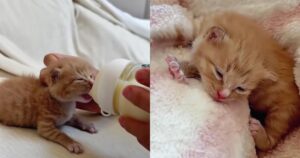
A mother cat responded to the cries of an orphaned kitten and adopted him as her own, demonstrating the strong maternal instincts that drive feline caregiving behavior.
The orphan kitten, separated from his biological mother, was in distress when a nursing female cat heard his vocalizations. Mother cats recognize the distress calls of kittens and respond protectively, even to young felines outside their litter. This lactating cat allowed the orphan to nurse alongside her own litter, integrating him into the family.
Cats rely heavily on sound to locate and care for their young. A kitten's cries trigger maternal responses in nursing females, who recognize these high-pitched vocalizations as signals of hunger or need. The adoptive mother cat's behavior reflects natural feline instincts to nurture vulnerable young, regardless of biological relation.
This adoption highlights why rescue organizations and shelters often use "foster mother" programs. Nursing cats can provide essential nutrition, warmth, and socialization to orphaned or bottle-fed kittens. The presence of a mother cat reduces stress for vulnerable kittens and improves their chances of healthy development.
For cat owners discovering orphaned kittens, introducing them to a nursing mother cat remains one of the safest care options when available. Kittens require constant feeding every few hours during early weeks, making maternal care invaluable. The adoptive mother handles warmth regulation, grooming, and immune support that orphans need to thrive.
This story underscores feline maternal behavior's flexibility and strength. Mother cats prioritize survival of young based on sound and scent cues, not genetic connection. Such natural adoption patterns have helped ensure kitten survival for thousands of years and continue supporting rescue efforts today.