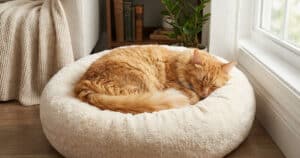
Cats sleep between 12 and 16 hours daily, making a comfortable bed essential to their health and happiness. The right bed supports your cat's natural sleep preferences while providing a safe, cozy retreat.
Different cats have different sleep styles. Some prefer enclosed spaces that offer security and warmth. Cats with anxiety or stress often gravitate toward beds with raised edges or hood covers that create a den-like environment. The Uro Textured Nesting Bed and similar enclosed designs appeal to these felines, offering enclosed comfort that mimics natural hideaways.
Other cats prefer open, flat sleeping surfaces. Younger, more confident cats may choose elevated beds that allow them to monitor their surroundings while resting. Platforms and raised orthopedic beds work well for these cats and also help with temperature regulation by allowing air circulation underneath.
Orthopedic beds suit senior cats and those with joint pain or arthritis. Memory foam construction reduces pressure on aging joints and supports proper spinal alignment. These beds benefit cats over seven years old and those recovering from injury or surgery.
Material matters too. Washable covers make maintenance easier. Natural materials like cotton and wool regulate temperature and provide breathability. Waterproof bases protect furniture from accidents, especially valuable for kittens and older cats with potential litter box issues.
Placement affects bed use. Cats prefer quiet areas away from high traffic. A bed near a window offers natural light and outside stimulation. Placing beds in warm spots, like areas receiving afternoon sun, increases their appeal.
When selecting a cat bed, consider your cat's age, health status, and personality. Watch where your cat naturally sleeps. Does she curl into a ball? She needs an enclosed bed. Does he sprawl out? An open platform works better. Some cats benefit from multiple beds in different locations throughout the home.
Quality cat beds range from