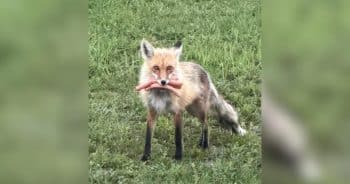
A wild fox caught stealing food from a backyard barbecue attempted to hide the evidence by burying the stolen goods, displaying behavior that researchers say reveals the animal's problem-solving abilities.
The incident occurred when a fox approached a residential property during an outdoor meal. The animal grabbed food from the grill and then dug in nearby soil to bury its prize. The behavior mirrors what foxes naturally do to cache food for later consumption, but residents documented the unusual boldness of the animal approaching human activity so directly.
This theft highlights growing concerns about urban foxes adapting to residential environments. Foxes increasingly venture into suburban and urban areas searching for accessible food sources. Garbage cans, pet food bowls, and unsecured outdoor dining create easy opportunities for these intelligent carnivores. The red fox, the most common wild fox species in North America and Europe, demonstrates remarkable adaptability to human spaces.
Wildlife experts emphasize that such encounters don't indicate aggression. Foxes naturally avoid confrontation with people. The animal's attempt to conceal the stolen food shows normal caching behavior, not intentional deception in a human sense. However, the incident serves as a reminder for pet owners to secure outdoor food sources.
Residents should store pet food indoors, secure garbage containers in locked sheds or bins, and avoid leaving food accessible during outdoor meals. Foxes pose minimal threat to most pets, though small animals and unsupervised cats remain at risk. Installing motion-activated lights and removing brush piles can discourage foxes from frequenting yards.
The fox's successful raid demonstrates why these animals thrive in human-modified landscapes. Their intelligence, flexible diet, and cautious behavior allow them to navigate urban environments while minimizing direct contact. Rather than viewing this as a problem, wildlife professionals suggest coexisting peacefully by removing temptations that attract foxes to residential areas in the first place