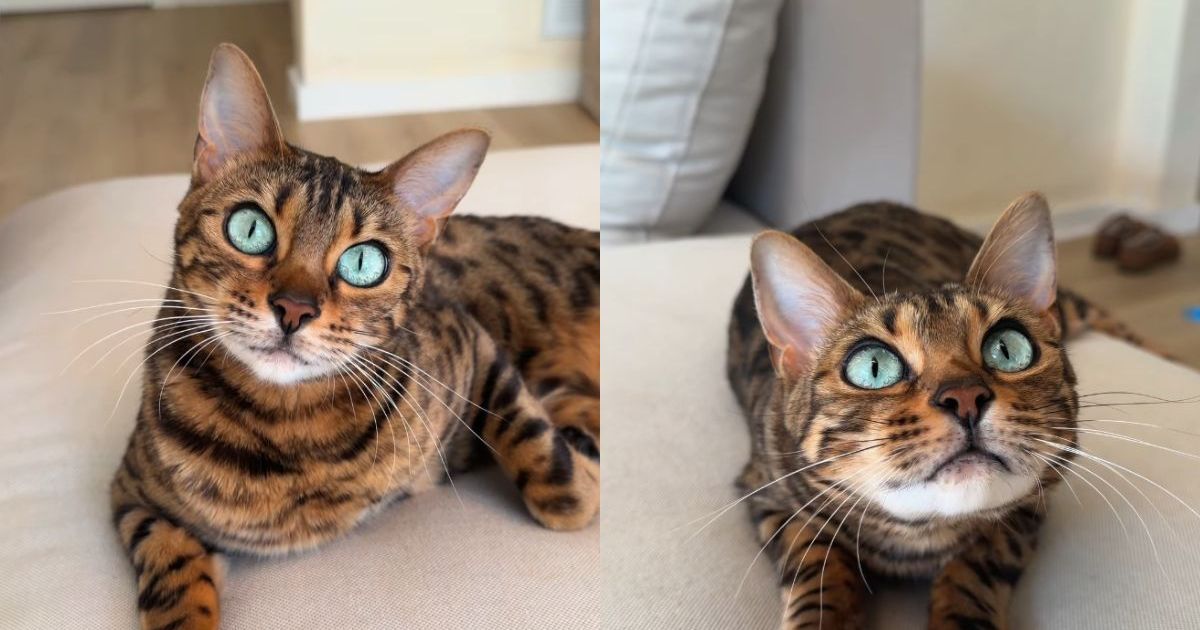
Bengal cat owner @badgalrory documented a remarkable eye color transformation in her cat Rory over four years. The video, shared on social media, captures Rory's eyes changing dramatically from the kitten stage into adulthood.
Kittens are born with blue eyes due to the lack of pigment in their irises. As Bengal cats mature, their eye color typically shifts to green, amber, or gold tones. This transformation occurs as melanin deposits develop in the iris, a completely normal developmental process that happens gradually over weeks and months.
Rory's case generated significant online attention because the shift appears particularly striking when condensed into a video format. What viewers witness is the natural progression of feline eye development, though the visual impact of seeing the change compressed in time makes it appear especially dramatic.
Bengal cats, a hybrid breed descended from Asian leopard cats, often develop distinctive eye colors that contribute to their wild appearance. Their eyes frequently mature into striking shades that complement their spotted or marbled coat patterns. The breed standard recognizes various eye colors, with some individuals developing especially vivid green or golden hues.
The timing of eye color changes varies among individual cats. Most kittens experience noticeable shifts within their first eight to twelve weeks of life, though full color stabilization can take several months. By four years old, as in Rory's case, a cat's eye color is typically fully developed and permanent.
Understanding this natural process helps cat owners appreciate normal feline development. There's no cause for concern when a kitten's bright blue eyes gradually transform. This change reflects the healthy maturation of the eye's pigmentation system.
Rory's video serves as a charming reminder of how much cats change during their first years of life. Beyond eye color shifts, Bengal cats and all kittens experience remarkable growth in size, coat development, and behavioral changes.