# The Cat Biting Mistakes Most Owners Make (And What Works Instead)
Cat biting happens for specific reasons, and most owners handle it wrong. Understanding what triggers biting and how to respond makes the difference between a cat that nips occasionally and one with a serious aggression problem.
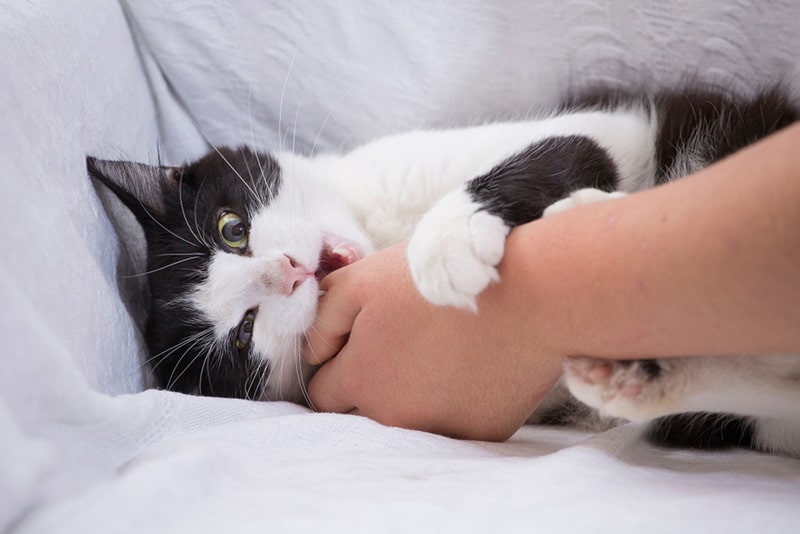
The biggest mistake owners make is using their hands as toys. When you wiggle your fingers in front of a kitten or play by letting your cat pounce on your palm, you teach the animal that human skin is prey. Cats don't understand the difference between play fighting and actual hunting. This training sticks. Owners then get confused when their adult cat bites during petting or interaction.
Another common error is punishing the bite after it happens. Hitting, yelling, or spraying water confuses cats. They don't connect the punishment to their action, especially if there's even a short delay. Punishment typically increases anxiety and can make biting worse over time.
Equally ineffective is trying to play through a bite. Some owners think engaging with a biting cat will wear out the behavior. It won't. It reinforces that biting works as a communication tool.
What actually works starts with prevention. Use wand toys, feather chasers, and string toys instead of your hands. This redirects the hunting instinct to appropriate targets. Keep play sessions short, around 10 to 15 minutes, so your cat doesn't become overstimulated.
Learn your cat's bite warnings. Tail swishing, ear flattening, and skin twitching signal that your cat is reaching its threshold. Stop touching immediately when you see these signs. Respecting these boundaries prevents escalation to actual bites.
If a bite does occur, withdraw attention completely. Stop playing, stop talking, and move away. Cats repeat behaviors that get them what they want.