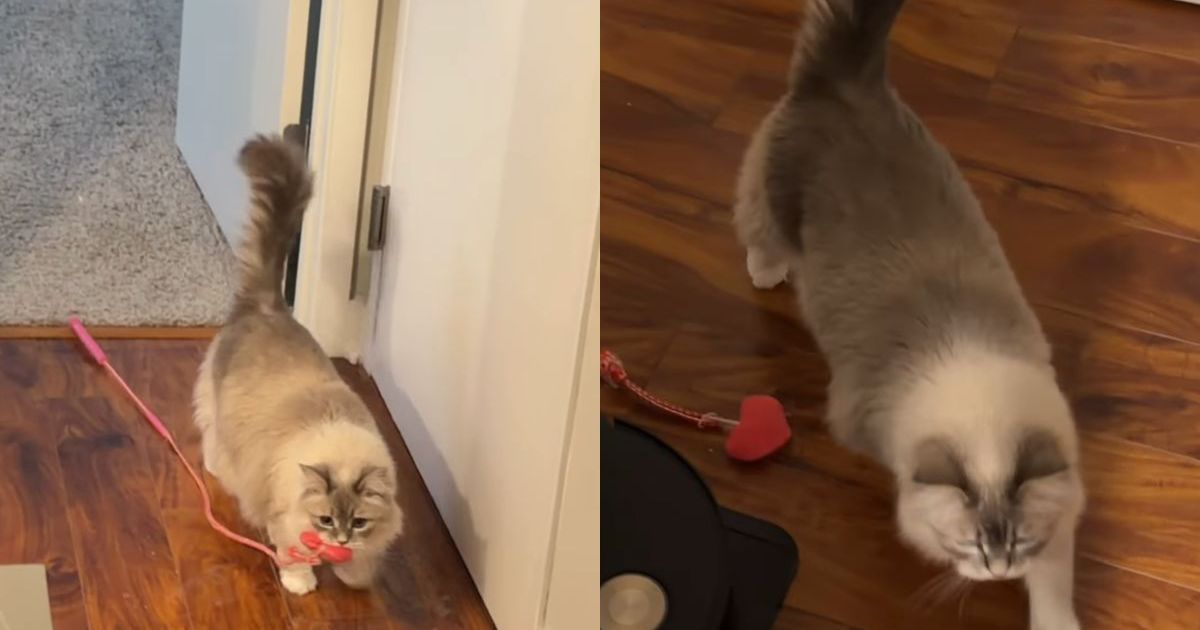
Cats often surprise their owners with dog-like behavior that contradicts the stereotype of aloof, independent animals. A recent viral video captured one cat doing exactly that, bringing a toy to her owner and initiating a game of fetch.
The interaction showcases something cat behaviorists have long understood: many domestic cats actively seek play and engagement with their humans. While dogs are famous for fetching, cats possess similar drives to hunt, chase, and interact with their owners through games. The difference lies in how these behaviors express themselves and how frequently owners recognize them.
This particular cat's behavior reflects what researchers call "play initiation." Rather than waiting passively for entertainment, the cat took the lead by presenting a toy to her owner. This demonstrates social bonding and trust. Cats that engage in fetch-like activities typically have strong attachments to their owners and view interactive play as a form of connection.
Not all cats enjoy fetch to the same degree. Individual personality, age, and early socialization influence whether a cat will retrieve toys. Some cats prefer interactive play with wands or laser pointers, while others gravitate toward fetch. Kittens and younger adults tend to be more playful than senior cats, though exceptions exist at every age.
Veterinarians and animal behaviorists recommend regular play sessions with cats for both physical and mental health. Interactive games reduce stress, maintain healthy weight, and strengthen the human-animal bond. Cats that engage in regular play with their owners often exhibit fewer behavioral problems like excessive meowing or destructive scratching.
For owners whose cats show interest in fetch, encouraging this behavior benefits both parties. It provides the cat with necessary exercise and mental stimulation while giving the owner a fun, shared activity. Starting with short play sessions and using toys the cat naturally enjoys works best.
This cat's toy delivery serves as a reminder that feline behavior exists on a spectrum far wider than popular culture suggests