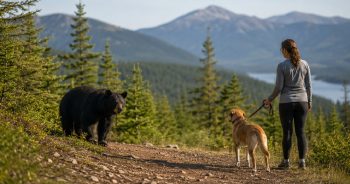
Dog owners who hike or walk in bear country need to know how to protect their pets if they encounter a wild bear. The most critical action is keeping your dog close and under control at all times.
If you spot a bear, do not let your dog run toward it. Dogs often trigger defensive responses in bears, and a charging dog can lead the bear directly back to you. Keep your dog on a short leash and move slowly away from the bear. Stay calm. Your dog will pick up on your anxiety and may panic or bolt.
Never allow your dog to investigate the bear or engage with it. Bears view approaching dogs as threats, and they will attack to protect themselves or their cubs. Even small dogs can provoke dangerous encounters.
Wildlife experts recommend carrying bear spray on trails where bears live. This irritant deters bears effectively and protects both you and your dog. Practice drawing it quickly so you can respond fast if needed.
Before hiking, check local wildlife reports. Know which areas have recent bear activity. Avoid hiking at dawn or dusk when bears feed actively. Make noise while walking so bears hear you coming and leave the area before contact happens.
Keep your dog's vaccinations current, particularly rabies. This protects your pet if any wildlife contact occurs. Carry a first aid kit designed for dogs in case your pet gets injured.
If a bear charges despite your precautions, back away while keeping your dog close. Do not run. Dropping to the ground and playing dead works for humans but may not protect your dog. Your primary goal is removing both yourself and your pet from the encounter zone safely.
After any bear encounter, contact your local wildlife agency immediately. They track dangerous bears and can warn other outdoor users. If your dog was injured or bitten, seek veterinary care right away, even for minor wounds. Wildlife bites carry infection risks.
Being prepared transforms potentially deadly situations into manageable ones