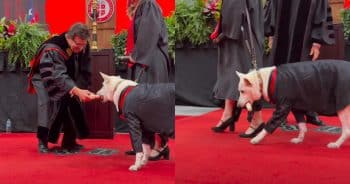
A service dog completed her rigorous training program and received official recognition at a graduation ceremony, marking the culmination of months of specialized instruction.
The dog completed a comprehensive service dog training curriculum designed to prepare her for real-world assistance work. Service dogs undergo extensive training to perform specific tasks for their handlers, including mobility assistance, alerting to medical conditions, and providing psychological support. Training programs typically span 18 to 24 months and involve teaching dogs to respond reliably to commands, navigate public spaces, and remain calm in distracting environments.
The graduation ceremony celebrates both the dog's achievement and the dedication required from trainers and support staff. These events acknowledge the significant work that goes into preparing service dogs for their future roles helping people with disabilities. The "dogploma" presented at the ceremony serves as a symbolic and official completion document.
Service dogs fill vital roles for people with various disabilities. Dogs trained for mobility assistance help wheelchair users and people with balance disorders. Alert dogs notify handlers of incoming seizures, blood sugar changes, or other medical emergencies. Psychiatric service dogs ground people experiencing dissociation or anxiety episodes. The precision required for these tasks demands consistent, patient training and careful handler-dog bonding.
Training facilities invest substantial resources in developing skilled service dogs. Professional trainers assess each dog's temperament, physical capabilities, and learning style to determine appropriate roles. Not all dogs complete training successfully, as the work requires specific behavioral traits and physical capabilities.
The graduation milestone represents a transition point. The dog now moves from training environments to work alongside her handler. This partnership requires ongoing communication and adjustment as the team learns to function together in daily life. Many service dog programs maintain contact with handlers throughout the dog's career to ensure continued success and address any emerging needs.
These ceremonies highlight the human-animal bond and the remarkable capabilities of trained service dogs in improving quality of life for people with disabilities.