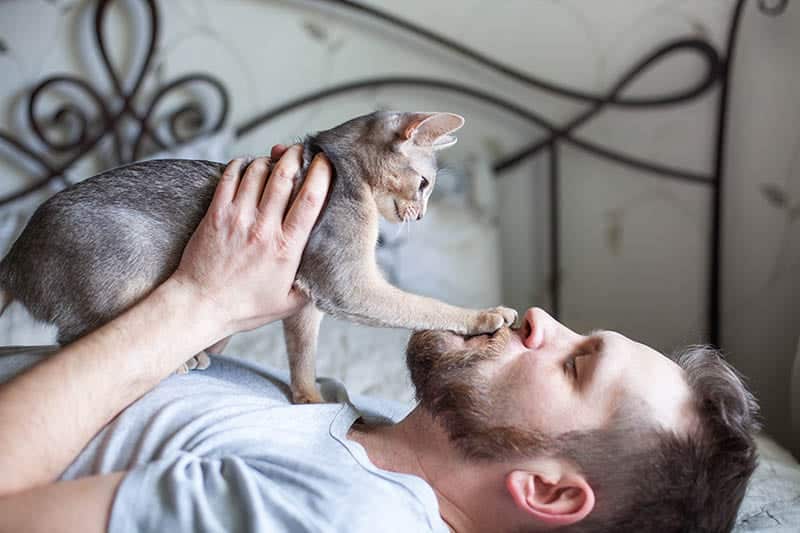
Cats use their paws to communicate in specific ways, and a paw to the face delivers distinct messages that pet owners should recognize.
When a cat places a paw on your face, she is expressing one of five primary intentions. First, cats paw at your face to get your attention. This direct contact demands immediate response when they want food, playtime, or interaction. Second, a gentle paw tap signals affection. Cats that slowly blink while patting your face are showing trust and love. Third, cats use face pawing to mark you with scent glands located on their paws. This territorial behavior claims you as part of their family group.
Fourth, a paw to the face can indicate a request for grooming. Cats that do this often want you to pet them or engage in bonding behavior. Fifth, repeated pawing may signal stress or anxiety. A cat in discomfort or feeling unsafe sometimes uses paw contact to seek reassurance from their owner.
The intensity and context matter. Slow, gentle paws combined with purring and relaxed body language indicate positive communication. Fast, forceful swipes with flattened ears or tail thumping suggest frustration or overstimulation. Cats with extended claws are playing or expressing irritation, while retracted claws mean gentleness.
Understanding these five messages helps owners respond appropriately. When your cat paws your face softly, reciprocate with petting or quiet time together. When pawing becomes aggressive, redirect to toys or create space. Pay attention to your cat's body language alongside the paw behavior. Ears forward, slow blinks, and a relaxed posture indicate positive communication. Ears back, hissing, or aggressive posturing require you to give your cat distance.
By recognizing what your cat communicates through paw contact, you strengthen your relationship and meet her