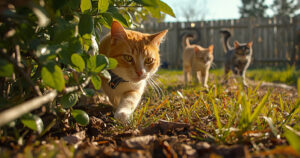
Researchers equipped domestic cats with tiny cameras to document their daily activities and reveal how these animals perceive their environment. The miniature recording devices captured footage from the cats' perspective, showing what they see, hunt, and explore during their typical day.
The camera project offers pet owners a rare window into feline behavior. Cats experience the world differently than humans do. Their eyes detect motion with exceptional precision and excel in low-light conditions. The footage reveals how cats navigate their homes, interact with their human families, and pursue prey or toys with laser focus.
The study documents hunting behaviors in detail. Cats stalked insects, pounced on moving objects, and tracked targets with head movements that humans rarely notice. The cameras showed how cats use their whiskers and peripheral vision to hunt effectively, even in dim lighting where human vision fails.
Pet owners watching the footage gain insight into why their cats behave certain ways. A cat staring intently at a wall may track a tiny insect invisible to human eyes. A cat's sudden pounce on "nothing" captures a successful hunt from the feline perspective. Understanding these behaviors helps owners appreciate their cats' sensory abilities.
The research also documents social interactions. The footage shows how cats approach their owners, other household pets, and unfamiliar animals. Their perspective reveals the visual cues they use to decide whether to approach, avoid, or investigate something new.
This type of animal-perspective research benefits cat behavior science. Veterinarians and animal behaviorists use such data to understand feline psychology better. Cat owners who watch the footage often report greater empathy for their pets and appreciation for their unique sensory world.
The tiny cameras prove that cats live in a richly detailed visual landscape shaped by motion sensitivity and night vision. What appears boring to humans captivates cats constantly. This research reminds pet owners that their feline companions experience home life in ways entirely different from