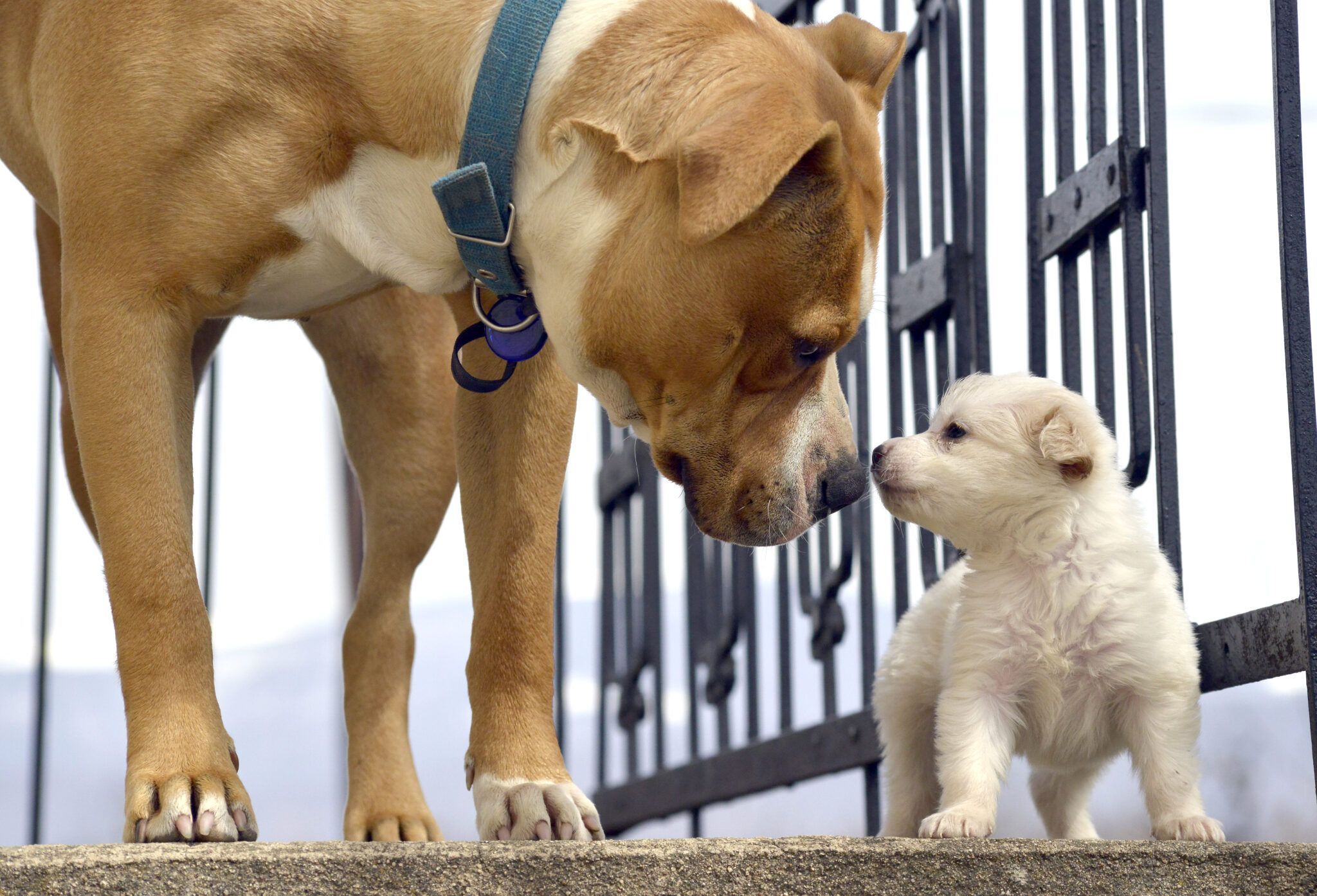
Dogs communicate through a complex system that combines body language, facial expressions, vocalizations, and scent marking. When you observe dogs at a dog park, their quick sniffs and wagging tails represent far more than casual greetings. They're exchanging detailed information across multiple channels simultaneously.
Body language forms the foundation of canine communication. A dog's posture, tail position, and ear orientation convey emotional states and intentions. A relaxed, forward-facing dog with a loose wagging tail signals friendliness, while a stiff body and tucked tail indicate fear or submission. Dogs also read facial expressions carefully, noticing whether another dog's mouth is open or closed, where their eyes are focused, and whether their teeth are visible.
Vocalizations add another layer to dog-to-dog communication. Barks, growls, whines, and howls each serve specific purposes. A play bark differs distinctly from a warning bark. Growls communicate warnings or boundaries. Whines often express excitement or anxiety. Howling can serve as a gathering call or long-distance communication.
Scent communication runs deeper than most dog owners realize. Dogs have approximately 300 million olfactory receptors, compared to humans' six million. When dogs sniff each other, they're reading information about health status, diet, emotional state, and reproductive cycle. Urine marking and anal gland scent deposits leave chemical messages for other dogs to discover later.
These communication channels work together seamlessly. A dog might lower their play bow while offering a soft bark and a wagging tail to propose play to another dog. If the second dog responds with similar signals and play-fighting begins, both dogs modulate their intensity based on subtle shifts in body position and vocalization.
Understanding canine communication helps owners better interpret their pets' interactions. Dogs are rarely truly aggressive without warning. They broadcast their