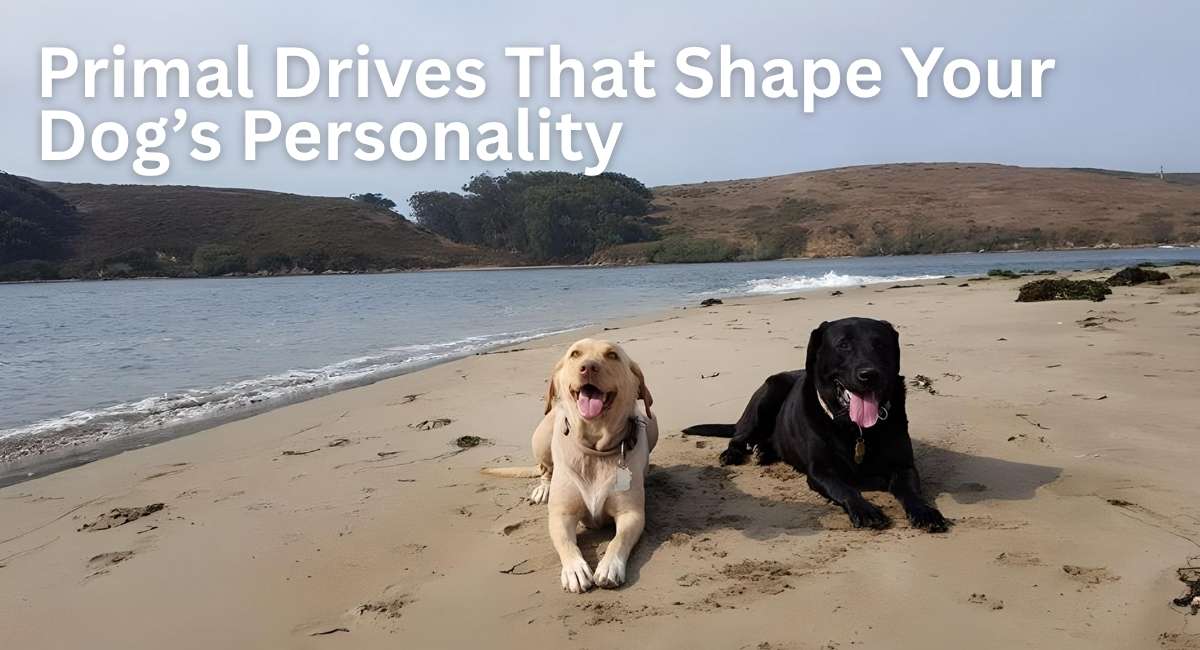
# Three Primal Drives That Shape Your Dog's Personality
Your dog's behavior stems from three ancient drives that persist despite generations of domestication. Even the calmest couch companion retains instincts rooted in survival and reproduction.
Dogs descended from wolves, and selective breeding has modified their appearance and temperament, but not their fundamental nature. Understanding these primal drives helps owners interpret actions that otherwise seem puzzling or problematic.
The predatory drive remains the most powerful force in canine behavior. This encompasses stalking, chasing, and capturing prey. You see it when your dog fixates on squirrels, lunges at bikes, or pounces on toys. Some breeds show this instinct more intensely than others. Border collies display stalking behavior in their herding patterns. Terriers pursue small animals with fierce determination. Sighthounds chase at impressive speeds. Recognizing this drive explains why your dog ignores "leave it" commands when triggered by movement.
The territorial drive compels dogs to establish and defend space. This manifests as fence running, door reactivity, and aggressive responses to strangers entering "their" home. Dogs patrol their boundaries, mark with urine, and alert owners to perceived threats. This drive protects resources and establishes social hierarchy within the pack structure.
The social or hierarchical drive governs how dogs relate to each other and humans. Dogs are pack animals that naturally organize themselves into structured groups with leadership roles. This drive influences play behavior, resource guarding, and how dogs respond to training. It explains why some dogs challenge authority while others readily defer.
These three drives interact constantly. A dog may show predatory excitement toward a visitor (social drive), while simultaneously defending territory against that same person. A dog might guard food (territorial) while seeking pack approval (social drive) by bringing the item to you.
Smart owners work with these