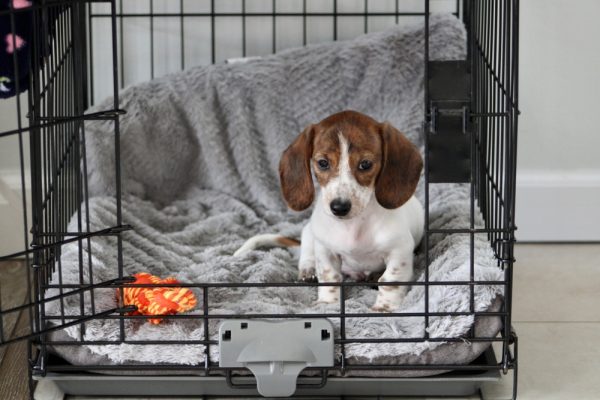
Most dog owners set up crates incorrectly, compromising their pet's comfort and the training process itself. The main mistake involves crate size. Many owners choose crates that are too large, which defeats the purpose of crate training entirely.
Dogs naturally avoid soiling their sleeping area. A properly sized crate uses this instinct to support housebreaking. When a crate is oversized, dogs can eliminate in one corner and sleep in another, breaking the foundation of bathroom training. The crate should be just large enough for your dog to stand up, turn around, and lie down comfortably. Nothing more.
For puppies, this means purchasing multiple crates as they grow. A crate suitable for a 10-pound puppy won't work for a 60-pound adult. Some owners use dividers to adjust crate space as puppies develop, which offers a cost-effective alternative to buying several crates.
Temperature control represents another overlooked factor. Crates placed in direct sunlight, near heating vents, or in drafty areas create discomfort. Position the crate in a temperature-neutral location where your dog can relax without stress.
Bedding choices matter too. While soft, cushioned beds feel comfortable, they can absorb urine during accidents. Hard plastic liners or washable, absorbent mats work better for puppies still learning bladder control. Adult dogs with reliable housebreaking can enjoy cozy bedding.
Location within your home affects crate success significantly. Dogs are pack animals that want to be near family. Placing a crate in an isolated basement creates anxiety and resistance. Instead, position it in a main living area where your dog feels included while still having a safe retreat space.
Finally, introduce crates gradually with positive associations. Feed meals inside the crate, offer high-value treats, and never use it