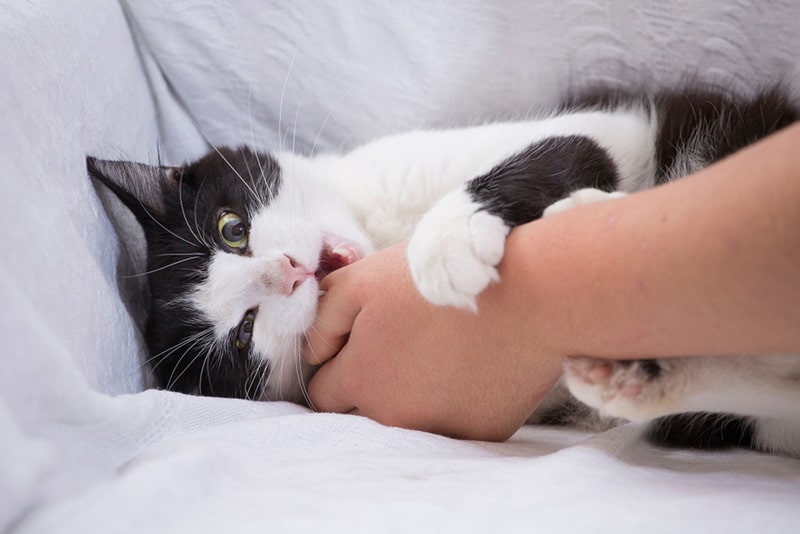
Most cat owners misread their cat's body language before a bite happens. Cats signal discomfort through tail flicks, ear rotations, and skin twitching. Owners who miss these warnings and continue petting or handling their cat force the animal to escalate to biting as a last resort.
The biggest mistake is treating cat bites as simple aggression. Biting is communication. A cat that bites is telling you something is wrong. Pain, overstimulation, fear, or territorial stress all trigger biting behavior. Punishment after the fact does nothing because cats don't connect delayed consequences to their actions the way dogs do.
Stop petting when your cat shows the first signs of irritation. A tail that swishes back and forth signals mounting frustration. Ears that flatten against the head mean your cat feels threatened. Skin ripples along the back indicate sensory overload. Respect these warnings by removing your hands immediately.
Interactive play often causes problems. Owners who let cats chase and pounce on bare hands teach biting as acceptable behavior. Use wand toys and laser pointers instead. These tools keep your hands at a distance while your cat exercises its hunting instincts safely.
Redirect biting energy toward appropriate outlets. Keep interactive toys nearby. Offer scratching posts and climbing structures. A bored cat with pent-up hunting drive bites more frequently. Enrichment reduces unwanted biting substantially.
If your cat bites, stop all interaction instantly. Don't yell or grab your cat. Simply walk away and ignore the behavior for several minutes. Cats learn quickly that biting ends playtime. Consistency matters more than intensity.
Some cats bite due to medical pain. If your cat suddenly increases biting frequency or intensity, schedule a veterinary exam. Dental disease, arthritis, and urinary issues all cause pain-related aggression