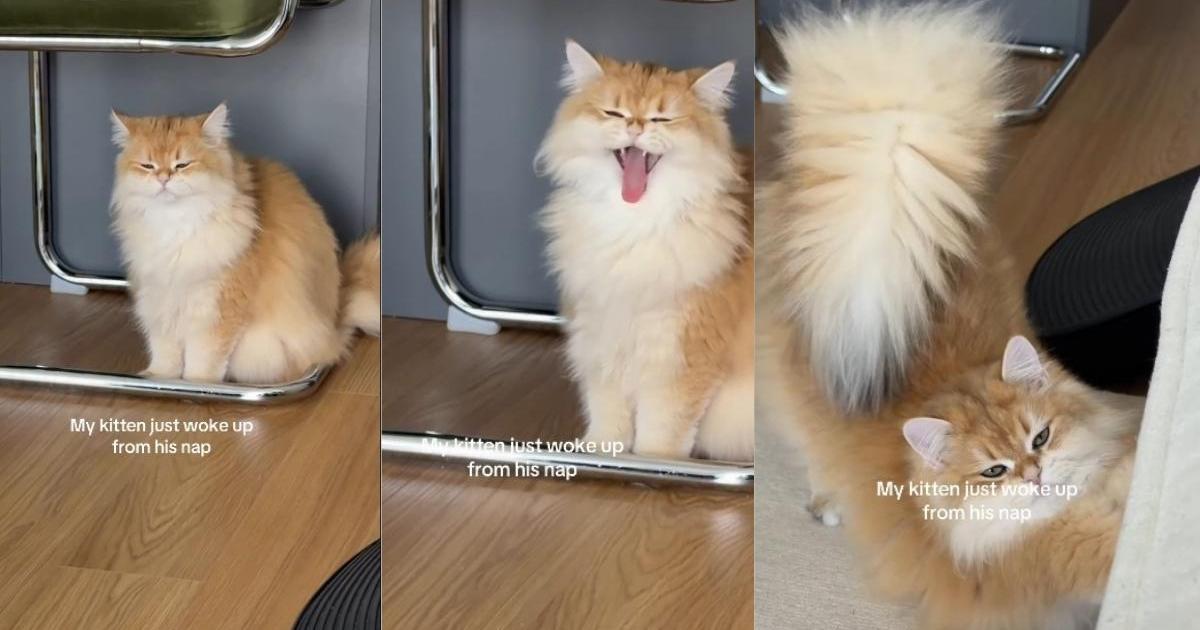
A viral video of a kitten waking from a nap has captivated cat lovers online with its relatable portrayal of post-sleep grogginess. The footage shows a fluffy kitten struggling to shake off drowsiness, displaying the hallmark signs of a groggy wake-up: heavy-lidded eyes, prolonged yawns, and slow movements as the kitten gradually processes its surroundings.
The clip resonates with viewers because it captures authentic feline behavior that mirrors human post-nap confusion. Kittens and adult cats spend significant portions of their day sleeping, typically 12 to 16 hours daily. During rapid eye movement (REM) sleep, cats experience genuine rest that leaves them temporarily disoriented upon waking, just like their human companions.
The kitten's behavior demonstrates normal sleep physiology in cats. Young kittens require even more rest than adult cats to support their rapid growth and development. When they wake, their brains need time to transition from sleep to alertness, a process called sleep inertia. This explains the slow, deliberate movements and droopy expressions visible in the video.
For cat owners, these sleepy wake-up moments offer windows into their pets' natural rhythms. Kittens typically enter and exit sleep quickly but may appear confused immediately after waking. The heavy-lidded stare and delayed responses are not signs of illness but rather the normal neurological process of consciousness returning.
The viral appeal of this footage highlights how cat owners recognize themselves in their pets' behaviors. The relatable drowsiness and gradual awareness creation an emotional connection between viewers and the kitten. Such videos remind people that cats experience genuine fatigue and need undisturbed rest spaces to maintain health.
Pet owners should ensure their kittens have quiet, safe spaces for napping without interruption. Respecting a ki