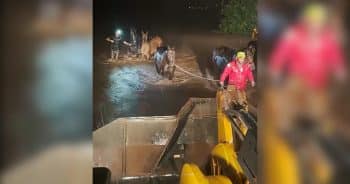
A coordinated rescue operation saved 15 horses from rising floodwaters during a midnight emergency response. First responders and volunteers worked through the night to evacuate the animals from a property threatened by severe flooding.
The rescue team transported all 15 horses to safety before water levels reached critical heights. Teams used trailers and coordinated logistics to move the large animals quickly from the danger zone. No horses suffered injuries during the evacuation.
Flooding events pose serious risks to livestock trapped in pastures or structures. Horses cannot survive extended periods in deep water, and panic during evacuation attempts often leads to injury. The midnight timing of this rescue highlights how floodwaters can rise suddenly, sometimes giving owners only hours to react.
First responders emphasized the importance of evacuation planning for horse owners in flood-prone areas. Having transportation arranged in advance, knowing safe routes away from property, and maintaining up-to-date records of each animal helps ensure faster, safer rescues.
All 15 horses received veterinary checks following evacuation. Horses rescued from flood conditions sometimes develop secondary health issues like dehydration or respiratory stress, even after reaching dry ground. The team's rapid response prevented such complications in this case.
Local animal welfare organizations credited the successful outcome to quick community action and volunteer coordination. The rescue demonstrates how preparedness and swift decision-making save lives when natural disasters strike.
Horse owners facing flood threats should contact local animal control or equine rescue groups immediately. Waiting for water levels to stabilize often results in missed evacuation windows. These organizations maintain emergency contacts and trailer networks specifically for livestock emergencies.
WHAT THIS MEANS: Flood preparedness for horses requires advance planning, accessible evacuation routes, and immediate action when water threatens.