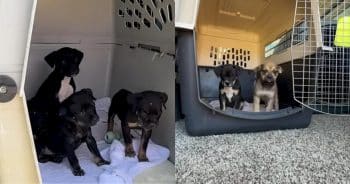
A backyard breeder in an undisclosed location kept 11 puppies in severe neglect, depriving them of adequate food and care. Animal welfare authorities removed the starving dogs and placed them in rescue care, where they now receive veterinary treatment and proper nutrition to recover from malnutrition and neglect.
The puppies arrived at the rescue facility in critical condition, showing signs of severe underweight status and health complications from prolonged inadequate feeding. Veterinarians assessed each puppy for parasites, infections, and organ damage common in cases of extreme neglect. The rescue team developed individualized feeding plans to safely restore the puppies' weight and strength without overwhelming their compromised digestive systems.
Backyard breeders prioritize profit over animal welfare, often confining dogs to inadequate spaces with minimal food and veterinary care. This operation represents a widespread problem in the dog breeding industry. Puppies born in these conditions suffer developmental delays, behavioral problems, and lifelong health issues even after rescue.
The puppies will remain in foster care during their recovery period. Once they reach healthy weights and pass veterinary clearance, rescue staff will evaluate each dog's temperament and behavior before considering adoption. The recovery timeline typically spans several months as malnourished puppies rebuild muscle mass and establish normal digestive function.
This case highlights the importance of purchasing dogs from responsible breeders or adopting from shelters and rescue organizations. Pet owners considering a new puppy should visit the breeder's facility, meet the mother dog, and request health records and genetic testing results. Red flags include breeders unable or unwilling to show living conditions, reluctance to answer health questions, and unusually low prices.
THE TAKEAWAY: Supporting legitimate breeders and rescue organizations protects dogs from the cycle of neglect that backyard breeding perpetuates.