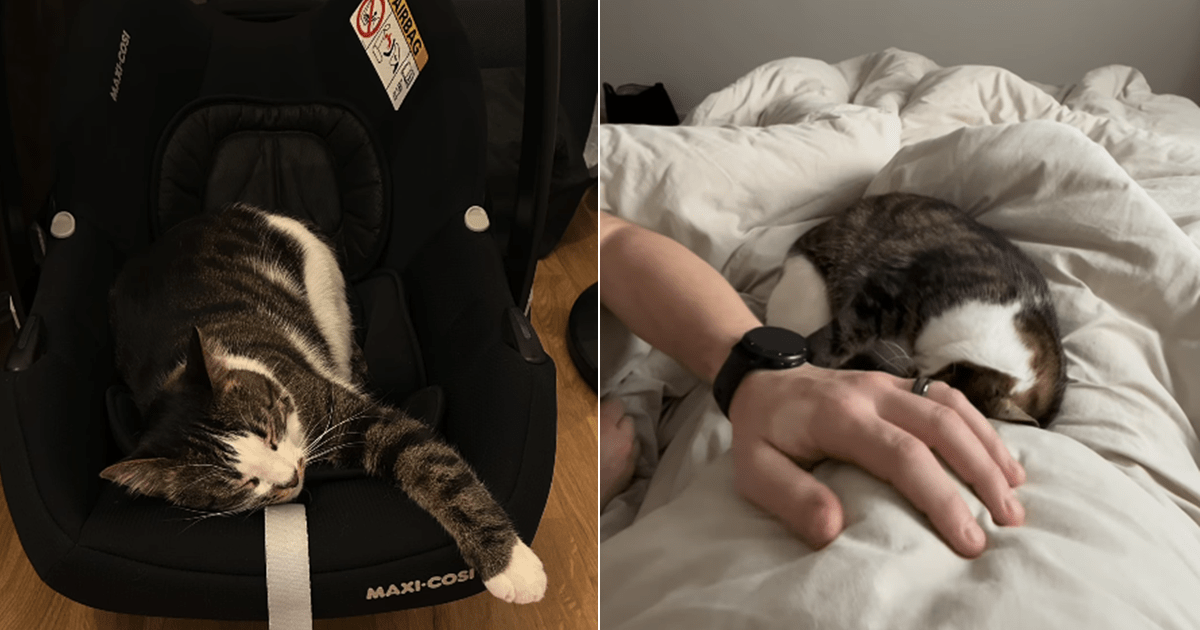
Pom, a domestic cat, has become his pregnant owner's devoted companion while simultaneously claiming ownership of everything in the home. The feline displays classic territorial behavior, marking objects and spaces throughout the house as his own domain.
The cat's split personality reveals something common in feline psychology. Cats often bond deeply with their humans, especially during times of change or vulnerability. Pregnancy triggers different scents and activity patterns in the home, which can intensify a cat's need to mark territory and reassert control over his environment. For Pom, being his mom's gentle supporter and being a possessive territorial animal aren't contradictions. They work together.
During pregnancy, cats may actually become more attentive to their owners. Research shows cats pick up on behavioral and chemical changes in humans. Some cats respond by staying closer, seeking more attention, or displaying protective behaviors. Pom's constant companionship likely reflects genuine attachment combined with instinctive territorial responses.
The territorial marking Pom demonstrates includes rubbing against objects, which deposits scent glands from his cheeks and body. This isn't aggression. It's communication. He's claiming spaces and reaffirming his bond with his owner by mixing his scent with hers and their shared environment.
Pet owners expecting children should understand this behavior as normal feline psychology rather than misbehavior. Cats need consistency, safe spaces, and continued attention during household transitions. Pom's devotion to his pregnant owner shows that cats can adapt well to major life changes when they feel secure.
As the family prepares for the baby's arrival, maintaining Pom's routine and giving him designated territories will help him adjust. His gentle companionship during pregnancy suggests he'll likely remain a loving presence once the newborn arrives. The cat's territorial claims over "his" home actually work in everyone's favor. A cat confident in his space tends