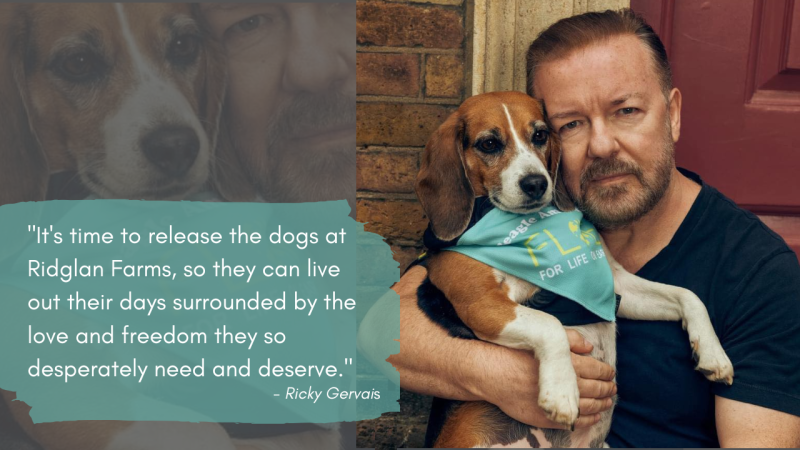
Ricky Gervais is pushing for the immediate release of beagles held at a Virginia research facility. The comedian and animal rights activist launched a public campaign targeting the breeding and testing operations that house hundreds of beagles destined for laboratory use.
Gervais called out the conditions beagles endure in research settings, emphasizing their social nature and need for human companionship. Beagles are frequently chosen for medical testing because of their size, docile temperament, and genetic similarity to humans. However, this same friendliness makes confinement in laboratory environments particularly damaging to their welfare.
The campaign centers on Envigo's Iroquois Beagle Colony in Cumberland, Virginia. This facility supplies dogs to pharmaceutical companies, universities, and medical research organizations across the United States. Beagles bred there spend their lives in kennels, often experiencing minimal human interaction before being used in toxicity testing, behavioral studies, and drug trials.
Animal protection organizations have documented conditions at similar facilities showing inadequate space, limited enrichment, and psychological distress in confined beagles. Dogs bred for research rarely experience grass, toys, or family environments. Many never feel a human touch before entering testing protocols.
Gervais framed his intervention as a moral imperative. He pointed to successful precedents where rescue organizations transported research beagles to adoptive homes after laboratory closures. Hundreds of previously confined beagles adapted well to home life, proving the dogs remain adoptable and capable of bonding with families.
The campaign asks supporters to contact Virginia legislators and Envigo's parent company about alternative funding paths for research that don't involve breeding dogs specifically for testing. Gervais emphasized that modern science offers cell cultures, computer modeling, and other methods that reduce or eliminate the need for animal testing in many fields.
His public pressure comes as animal welfare becomes increasingly visible