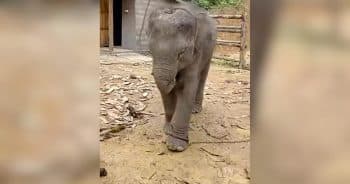
A baby elephant held in captivity has begun its journey to freedom following rescue efforts. The young animal spent months chained, suffering physical and psychological damage from confinement. Rescue teams intervened to remove the chains and relocate the elephant to a sanctuary environment where it can move freely and interact with other elephants.
The elephant's first independent steps mark a turning point in its recovery. Veterinarians monitoring the animal report that it shows signs of improved behavior and mobility since removal from its restraints. The calf now has access to natural foraging opportunities and space to develop normal elephant behaviors like mud bathing and social bonding.
This case highlights the physical toll captivity takes on young elephants. Prolonged chaining causes muscle atrophy, joint problems, and behavioral issues including repetitive swaying and self-injury. The elephant's progress demonstrates that rehabilitation is possible with proper veterinary care and appropriate living conditions.
Wildlife experts emphasize that elephants require vast territories and social structures to thrive. The sanctuary providing this elephant's care operates under standards that prioritize natural behaviors and herd dynamics. The rescue represents growing recognition that captive confinement fails to meet elephants' complex physical and emotional needs.