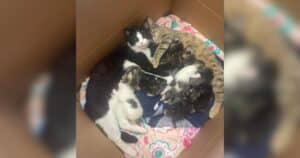
Two stray mother cats demonstrated remarkable cooperative behavior by sharing food and caring for each other's kittens. The cats worked together to forage for meals and nurse their combined litter, creating a mutual support system that increased survival odds for all the kittens involved.
This type of alloparenting, where unrelated females help raise offspring that aren't their own, occurs in feral cat colonies and reflects their social adaptability. The behavior provides practical benefits. Multiple nursing mothers can feed more kittens than a single cat could sustain alone. Shared vigilance against predators also improves protection for vulnerable young.
Rescue workers documented the arrangement and eventually brought all three cats and their kittens into a shelter program. The bonded pair stayed together throughout the transition, continuing their caregiving partnership in a foster home.
This case illustrates why trap-neuter-return programs and community cat initiatives matter. Feral cats form complex social bonds and demonstrate problem-solving abilities that rival their domestic counterparts. Understanding these behaviors helps shelter workers and rescuers handle colony cats more effectively and increases adoption success rates when the animals enter homes.
The stray mothers' cooperation shows that cats, even those without human socialization, possess emotional intelligence and capacity for partnership.