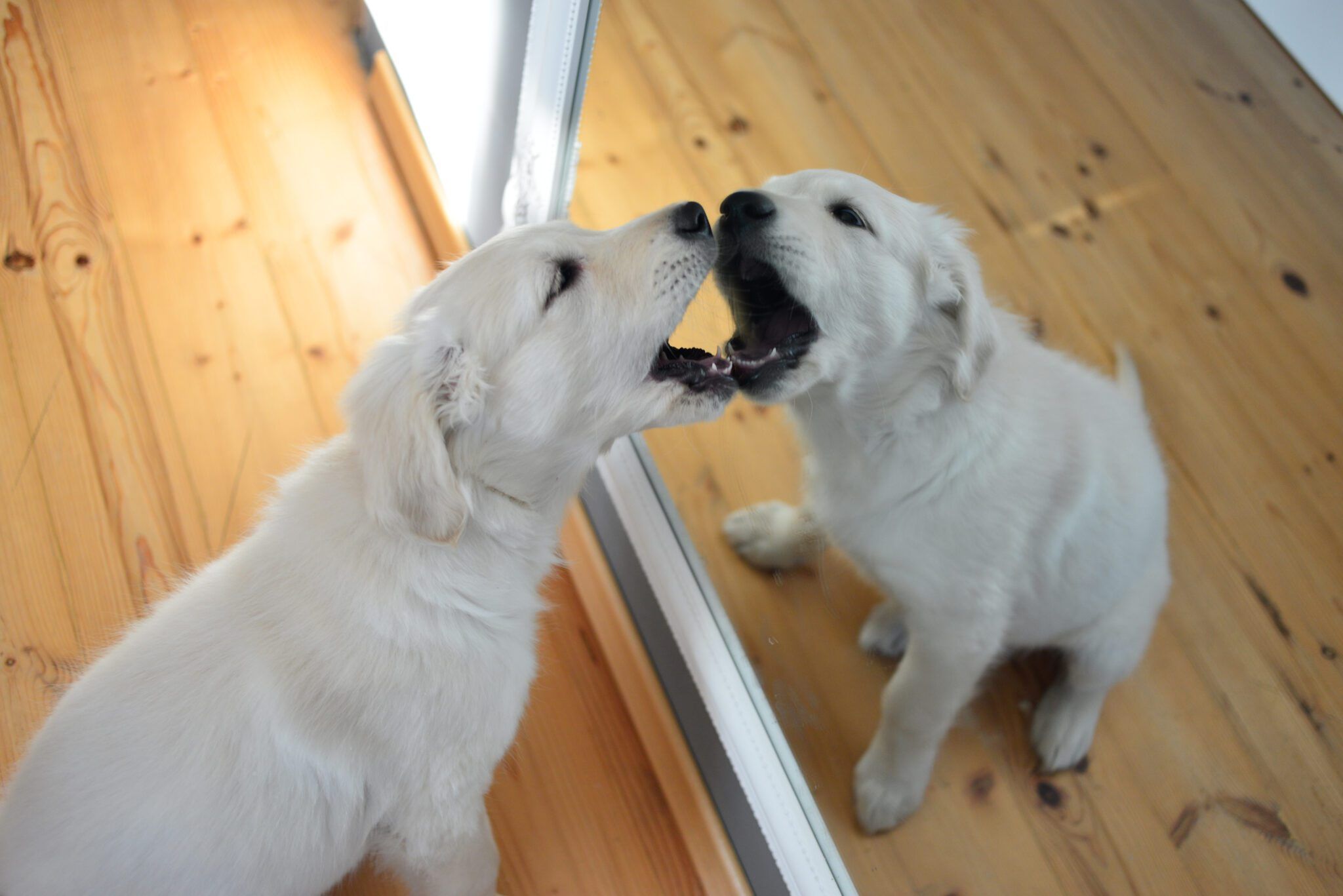
Dogs typically do not recognize themselves in mirrors, unlike some primates and dolphins that pass the mirror self-recognition test. Most dogs react to their reflection as if encountering another dog, which explains why some become agitated or aggressive toward the glass.
A journalist who adopted six dogs over several years observed three of them having strong reactions to mirrors. One incident involved her black Labrador, Solly, catching his reflection in a store window on Boston's Newbury Street. The dog's reaction prompted a store clerk to politely ask them to leave.
This behavior stems from how dogs process visual information. They rely far more heavily on scent and sound than on sight. A mirror image lacks the smell markers and auditory cues that dogs use to identify other animals and people.
Dogs do recognize their owners through voice, scent, and familiar patterns of movement. However, the stationary reflection in a mirror provides none of these reliable identifiers. Instead, the unfamiliar dog-shaped image triggers their social response system, leading to curiosity, play behavior, or defensiveness depending on the individual dog's temperament.
Understanding this limitation helps owners manage their dogs' reactions to mirrors and reflective surfaces, preventing unnecessary stress or behavioral incidents.